Saturday, August 19, 2017

Liverpool holds all the cards in Coutinho Saga by Kyle Bonn


Liverpool holds all the cards in Coutinho saga
by Kyle Bonn, soccer.nbcsports.com
August 18, 2017 02:15 PM

Photo by: Getty Images
In a time of heightening player control in a rapidly expanding transfer market, one club sticks out as grasping a clear understanding of the shifting business landscape and how to retain its grip on its most valuable assets.

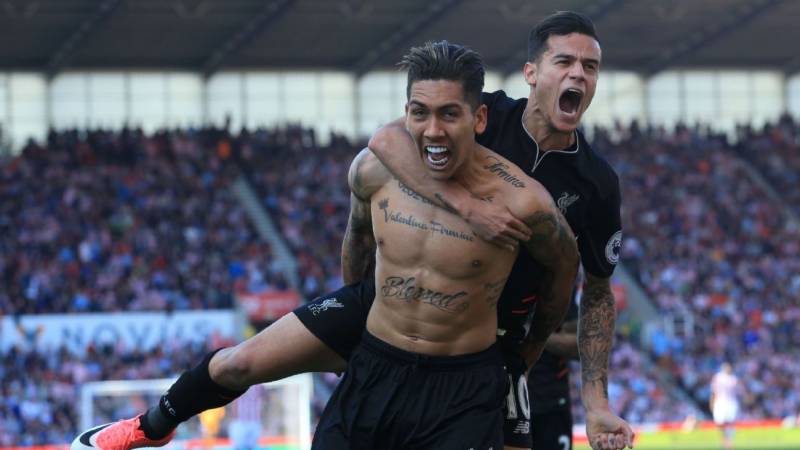
Following the sudden departure of superstar playmaker Neymar, Barcelona is trying desperately to pry Philippe Coutinho from Liverpool. On Friday, numerous reports in England claimed that Barcelona had gone in with a third bid, one even more ridiculous than the previous two. But they’re fighting a losing battle.

For a number of reasons, the Reds hold complete control over Philippe Coutinho’s transfer saga, a saga that will likely end with no transfer having been completed.

First and foremost, Coutinho just recently signed a contract extension in January that runs through 2022. As far as we know, there is no release clause in the deal, meaning at the most basic of levels, Liverpool maintains contractual control. However, as we’ve seen the past few years, that alone hasn’t stopped a number of players forcing their way out.

Yet this time, Liverpool finds itself in an advantageous position outside of just the contract. With the 2018 World Cup right around the corner, the Reds know that should they force Coutinho to stay, he is obligated to play at his best, knowing that any less would see him miss out on a spot in the packed Brazil roster, or at the least a starting position. Thus, Liverpool can be sure that even if their denial of his departure renders him despondent, he will likely remain the quality player he has proven to be.

The money Barcelona is offering – a whopping $151 million according to the most recent reports – is indeed a ludicrous amount for a player who, while quality, does not have nearly the marketability of his countrymate now residing in Paris. On talent alone, Coutinho likely isn’t worth that total, meaning Liverpool should sell. And yet, even with that cash in hand, in this hyper-inflated market where more is less, could it really do justice in replacing his impact in the club? This late in the transfer window, there’s no chance they could replace the 25-year-old, meaning they’d likely be torpedoing their entire season – Champions League included – to feel the warmth of $151 million burning a hole in their pocket until January, or even next summer.

Liverpool has built its entire roster around Coutinho. The arrival of Salah, the use of Firmino, the wide deployment of Mane, the makeup of the midfield. He’s good enough and young enough to be considered a “franchise player.” In two games without Coutinho this season, they’ve scored five goals, but that is a poor metric to describe the 180 wild minutes. The money alone isn’t worth the cost of his departure.

It’s quite possible that Barcelona’s stubbornness, brought on by the sudden loss of a beloved player and the meteoric rise of their rivals to all-time greatness, could see the Catalans come back with an even more preposterous bid. It’s true every player has a value, and at some point, should Barcelona’s blind rage see them flail wildly into the transfer window, the Reds should sell, and will. But with Fenway Sports Group not in dire need of cash and in an advantageous position, in all likelihood they won’t. Barcelona can throw all the Neymar money at Liverpool their heart desires, but nothing will force the Reds to budge.

Thursday, June 8, 2017

The Interview - Rafa Benitez By MARTIN HARDY FOR THE DAILY MAIL

Rafa Benitez: 'Can Newcastle win the title?... Why not?' In a rare interview, Toon boss talks 'fixing' a club, Premier League preparation... and his dogs!

  • Newcastle manager Rafa Benitez spoke candidly as he gave a rare interview
  • The Magpies boss is looking to take the club forward following promotion 
  • Spaniard hopes to 'create a stronger bond' between the fans, city and team
Gently he teases out the handwritten note that, on the left, has a list of all those teams relegated from the Premier League in the last six seasons.
On the other side are the teams who were promoted in the following campaign. He puts the paper down on his desk. There is a tick next to Burnley, the only side to have done so automatically, and there are marks next to those who have gone through the play-offs.
Newcastle manager Rafa Benitez at his desk with his trusty brown folder placed next to him
The Spaniard went on a city tour with assistant Francisco De Miguel Moreno back in November
Exploring the North East, Benitez poses in front of the iconic Angel of the North in Gateshead
‘It’s not as easy as people think,’ he says. ‘Yes, not at all, and we had to rebuild the team.’
We are sitting in Benitez’s office. Behind his black desk is a giant mural of the monolithic stands at the Leazes End and the Milburn Stand of St James’ Park that dominate the city’s skyline.
It is match day in the picture (taken from ground level at the Gallowgate End), which covers the entire wall, and Newcastle are at home to Crystal Palace. The ground is full, Benitez is stood pitch-side and it feels like you are in the stadium.

There are three magnetic boards, meticulously laid out with players’ names to the side, and on the opposite wall, next to the glass doors that open to the training fields, is a picture of four dogs: Clem, Red, Goofy and Honey.
How did you get four dogs to sit still for a picture?
‘Probably food!’ replies Benitez. ‘Clem is an American labrador and eats and eats and eats. Honey was homeless and we took her from a shelter.’
Then the Spaniard says, ‘Come, sit. Let’s talk. Would you like some water?’
A giant mural of St James' Park and it's vast stands dominates the wall in Benitez's office
Benitez is now a cult hero among the north-east club's passionate and loyal supporters
‘How do I get my four dogs to sit still for a picture? Food!’
The office has been modernised since Steve McClaren left. It is half flooring and half carpeted. It is a minimalist approach, a set of drawers next to his desk with a photocopier and, to the side of the sofa, underneath the giant TV screen at the far end of the room, is a glimpse into the more emotional side of the 57-year-old.
The Sky Bet Manager of the Month award sits proudly on top of a filing cabinet, two Performance of the Week awards are either side and then there is a gold trophy, given to the Newcastle Sports Personality of the Year (previously won by the likes of Kevin Keegan and Paul Gascoigne). He called it a ‘great honour’ when he received it.
It has been hectic and relentless since confirmation came that a manager with a c.v. that included the Champions League, two Spanish titles, an FA Cup, the UEFA Cup, the Europa League and the Italian Cup was set to lead the potential recovery of Newcastle United from the second tier of English football.
Benitez redesigned the training ground, ripped up pitches and led his players back into the local community.
‘Was the club lost? I think it was a little bit disorientated, rather than lost,’ he says. ‘Lost is a bigger word. It means everything was wrong, and everything was not like this.
‘The staff and the way things were going and how they were doing things was right. A lot of departments were right. You have to fix some things. They were capable to do it, it’s not that they couldn’t, they could do it, but I had to tell them, “Do it this way”.
‘I knew from the beginning that we had to create a stronger bond between fans, city and team. You could see there was a lack of unity. We were trying to find a way. “Together we are stronger”. That is the message I gave through the whole season.’
Benitez gets his hands on more silverware after guiding Newcastle to the Championship title
‘We needed a stronger bond between fans, city and team’
He is reluctant to talk about the Christmas presents he bought the entire staff, but I press him.
‘Yes, I got individual Christmas presents for everyone at the club,’ he adds. ‘At this time I wouldn’t say just I was doing that and nobody else. How many did I get? Forty or whatever.
‘Yes, it was a personal present to each one that I gave in my office. You see them and you say hello every single morning. It was good to give them presents because I have a good relationship with them.’
There was much building to be done, of trust and spirits to begin with, and then a team. From the ashes of relegation and a dispirited dressing room had to come something fresh. Newcastle spent close to £60million on 12 players, while recouping almost £90m in sales. A breathless summer of change.
‘What you are looking for are professionals... professionals who can learn and improve and can behave in the right way,’ Benitez says. ‘I have had a lot of very good players in all my career. This group have been fantastic.
‘From day one they were listening, they were trying to improve, trying to put in place the drills and the tactics we were trying to do. It has been really good to work with them.
Benitez revealed he bought and handed out individual presents to all his staff at the club
‘How did I know about the players? Some of them because of the Premier League, some of them talking with a lot of people, watching the games. You talk with different coaches, or friends, or people who have been in the country for years, they know really well the players, and after watching videos and videos then you can see them playing.’
The slog of the Championship season was a surprise, despite Benitez being forewarned.
‘It is more difficult than people think,’ he says. ‘The competition and the physicality of the game allows the other team to balance and neutralise you.
‘You play against teams that you know are not better than you but physically they are stronger and they are very competitive. Every free-kick and every corner is a 50-50 situation and anything can happen.
‘The other one is you play too many games. Sometimes two games a week, three games in 10 days, and then you don’t have time to recover physically and mentally. Mentally it is very demanding. It has been very hard in terms of football but it has been very easy in terms of putting everything behind the team: the city, the fans, the players, the staff,’ he says.
Benitez is shown around the Sir Bobby Robson Cancer Unit at the Freeman Hospital by Lady Elsie, the widow of the former Magpies' boss
It was first said Rafa Benitez would not manage in the Championship. It was then said Rafa Benitez could not manage in the Championship. Does it make winning the title more pleasing?
‘No, no, no, it does not mean more because people said I couldn’t do it in the Championship,’ he replies. ‘It’s a lot because we knew it was difficult. It was a big risk going into the Championship. Every game, we had to work even harder than we thought we would at the beginning to achieve.
‘We knew it was hard. We still had confidence. The main thing after winning nine games in a row was to keep people calm.
‘Everybody was expecting and saying now we can walk the division and after we had the situation of Brighton, Huddersfield and Reading (Newcastle won two and drew one). “OK, now we can do it!” And then Fulham came here and we lost and it was a wake-up!
The Magpies celebrate promotion to the Premier League after winning the Championship title
‘There have been a lot of good memories with a lot of games. Maybe that Brighton away game (Newcastle won 2-1) was one of the best because when we realised we could be champions and we could beat anyone.
‘You have to be stable, keep everybody with the same message, be calm, not overreact. Our staff, the nutritionist, the doctor, we have control of things. To give them advice, we have all the physical tests and all the physical data from different companies. We know what our players at Newcastle do in every game but we are not obsessive with that.’
That is Benitez the pragmatist, the focused manager who turned Newcastle around. But then there is the other side, the man who wept at the Hillsborough Memorial in 2011 and the man whose eyes were glazed as he walked to the Gallowgate End after leading Newcastle to a dramatic Championship title in the final minute of the final game of the season.
Benitez and his backroom staff pose together after sealing promotion back to the top-flight

RAFA'S WAY: THE BOOK

Rafa’s Way, by Martin Hardy, is published by deCoubertin Books at £19.99. 
Order at touchingdistance.com, decoubertin.co.uk or from leading book stores. 
‘Each one has his own way to show his emotions,’ he says. ‘So I am not the kind of manager who will be jumping around or rolling or whatever, all these things. But still I have my emotions and I’m really proud of all the things we are achieving now. You can see the fans and you can feel the emotion from the fans and the city.
‘Obviously you are proud, but also you are emotional, no?
‘Now when you are getting older, you appreciate these things more. Then you are maybe more linked and connected with the fans around you.’
Benitez had received the assurances he wanted from club owner Mike Ashley about direction and control after Newcastle’s return to the Premier League.
‘When I start something I put all my passion into it,’ he adds. ‘I will try to do my best and hopefully everything will be fine. The things will be done in the right way and we can build what we want to build, a strong team and a strong club that can compete in the Premier League for everything.
‘When I say everything, I don’t say the title, but why not? Everything means we have to be consistent. If you have the FA Cup, you can be there.
‘It is not Rafa saying he wants to win the league, no. I want to be competitive and after we can win a trophy or you can win the league. You never know. It will be more difficult with every year, but for sure, you have to try.’


Read more: http://www.dailymail.co.uk/sport/football/article-4581814/Rafa-Benitez-Newcastle-win-title-not.html#ixzz4jMgwdTrP
Follow us: @MailOnline on Twitter | DailyMail on Facebook

Liverpool drop interest in Virgil van Dijk

Unbelievable.... so now who is the one benefited from this, Liverpool rivals....i hope he will stay put at Soton or at least not go to team that challenge Liverpool...    

But i do hope there will another dramatic envelopment that favour LFC in the very near future...

-------------------------------------------------------------------------------------------------------------------------------------------------

Liverpool drop interest in Virgil van Dijk and embarrassingly apologise to Southampton for media speculation linking the Dutch defender to Anfield

  • Liverpool have dropped their interest in Southampton's Virgil van Dijk 
  • The Reds issued a statement in which they apologised to the south coast club
  • Anfield outfit also confirm they have ended all interest in the central defender
  • The move turned sour after Saints contacted the league over the Reds' conduct 

Monday, May 15, 2017

Jürgen Klopp Has Done as Good a Job as Antonio Conte

https://tomkinstimes.com/2017/05/jurgen-klopp-has-done-as-good-a-job-as-antonio-conte/

Controversial, I know. And clearly biased. And if pushed, an argument I wouldn’t stick to if pushed too hard. But based on budget and where the teams were, in addition to other issues, I think Jürgen Klopp has done more-or-less as good a job this season as Antonio Conte, even if Conte is the deserving Manager of the Year, and Hull’s Marco Silva almost pulled off the low-budget miracle of the season.
It’s hard to fault anything Conte has done, and Chelsea are deserving champions. But this talk about him inheriting a 10th-placed team is utterly misleading. They were 15th last season when Jose Mourinho was sacked after 17 games, averaging 1.06 points per game in defence of their title. They instantly saw a 50% improvement for the remainder of the season even though they went back to near-70-year-old Guus Hiddink, whose impressive first spell at Chelsea in 2008/09 was his last hurrah as a top-class boss; the average win percentage of his final four jobs in management was a measly 43%, despite including the Dutch and Turkish national teams, and mega-rich Russian club Anzhi Makhachkala (before the money ran out).
Chelsea were title-winners in 2015, but had imploded. The main reason for that implosion was Jose Mourinho’s presence (along with the difficulty of defending the title these days), with the Portuguese losing pretty much the entire dressing room (only John Terry stood by him at all times, in full kit, at all times). If the new manager could gain their respect, the players to win the league were already there. Indeed, it’s not like Chelsea had lost any key players from that 2015 title. Despite finishing 10th, Roman Abramovich’s wealth meant that no one was likely to leave – which would have been a worry for other clubs.
Conte inherited a team including arguably the best all-round battering ram of a striker in the country, the fastest skill-merchant in the league (both of whom were usually prolific goalscorers), and a goalkeeper about as good as any around. There were almost half a dozen top-class defenders. In fairness, he handled Diego Costa well in the weird mid-season standoff, but otherwise it’s been a relatively problem-free time from a group of players elevated by Mourinho and then destroyed by him. By contrast, anything Conte asked of them would seem agreeable.
Conte inherited a team of title-winners, and added another in N’golo Kante. He had players like Cesc Fabregas and Willian hanging around in the squad, and a new £30m Belgian striker who did nothing until score the goal that clinched the title. (Plus, he had the chance to run the rule over the 87,448 players Chelsea have out on loan across Europe, year after year; bringing home Victor Moses and Nathan Ake. It’s not “spending money” but the talent farm is a luxury all the same.) He faced no major injury situations; had Costa and Eden Hazard missed two-thirds of the season it’s fair to assume that they would not have been champions. The understudies did well on the rare occasions they were needed, but that’s hard to do over 30+ games.
Chelsea were the third-costliest team in the Premier League this season, so Conte outshot the richest two: Manchester United (1st) and Manchester City (2nd). Both Manchester clubs made it easier for him, although it shows how well, and how quickly, Conte adapted. Again, I have nothing but praise for the Italian, who seems far more likeable to the neutral (or rival) than his predecessor, too. I just object to the idea that it was a difficult task with that group of players.
Marco Silva at Hull has also shown that being a good manager is more important than being a British manager or someone who “knows the league” (same with Rafa Benítez apparently being destined to fail in the Championship as he “didn’t know the league”), but just like with players, new managers can adjust at different rates, due to differing problems. (Silva massively improved Hull but they were too far adrift when he arrived.)
Chelsea probably kept it sensible in the transfer market, with just three additions going into the first team (including one who was merely returning from loan). Again, they didn’t need to add six or eight players, did they? The talent was there. And expectations were lowered by their poor 2015/16.
Liverpool are some way back in 5th on team costs, with Spurs remaining the biggest overachievers, with the 6th-highest budget and a 2nd-placed finish. On the metric of overachievement at the top end, Mauricio Pochettino is manager of the season. They’ve given Chelsea a run for their money with a team that costs less than half as much.
Chelsea were peak age (c.27), with City probably a little too old (28), and with both Liverpool and Spurs younger than the average title winners. The average age of title winners in the Premier League is … 27. The previous four title winners had all averaged 27 years of age, too. (Which is not to say that averaging 27 means you’ll win the league, if you have crap players.) Arsenal and Manchester United are currently just under 27, but City’s rebuilding can be seen to be underway, with the arrival of Gabriel Jesus and the increased influence of Leroy Sane.
Pep Guardiola has had more struggles than Conte this season, but he’s trying to do something a bit more ambitious. Keeping it tight with quality defenders and relying on world-class attackers, like Chelsea do – while impressive – isn’t too complicated; and they are more recent title-winners than City, whose best players have been melting. City are in some kind of transition, but Chelsea, in terms of players, haven’t been.
Of course, younger teams get older; they gain experience, and generally improve as a result. It’s not a given, but it’s logical. Spurs and Liverpool have the most scope to improve if they mature as expected.
Chelsea also have the physical size, in part dating back to Mourinho’s obsession with giants. Along with Spurs and United, they are the “biggest” Big Six team; while Arsenal, Man City and Liverpool are the less physically imposing in terms of height and strength, with Liverpool the shortest and lightest. (I’ve probably mentioned before how having height is important in this often agricultural league.)
Appreciating Klopp
I think the proof that Jürgen Klopp knows what it takes – in addition to his brilliant success with Borussia Dortmund – is in how last summer’s additions have transformed the team. He is a gradual builder, not an overnight sensation; the same was true of his progress at Mainz and then Dortmund. The first two seasons were transitional. He inherited a better situation at Liverpool than at Dortmund, but also more pressure, and instant crazy expectation that surrounds Liverpool – and also because his own stock had been raised so high.
Going into this weekend’s game at West Ham, I asked Andrew Beasley for some with-and-without stats – which can of course be misleading, but when looking at a group of new additions the question seemed to make sense. What did the new signings provide?
In particular, I wondered how Liverpool had done with Sadio Mané, Joel Matip and Gini Wijnaldum – three players identified to take Liverpool up a level – all in the team, compared to without them. Quite nicely, it was an equal 18-game split of with and without across the 36 league matches. (Victory over West Ham has spoilt this, so let’s pretend that didn’t happen.)
Obviously Mané has been the big success, and the big absence when not available. When he plays, Liverpool have 2.15ppg, and without him it’s a fairly worrying 1.33, but of course, he’s missed only c.25% of the league games.
However, the 18 games with/without the new key trio is more stark: the 18 games with Mané, Matip and Wijnaldum all starting is the title-winning form of 2.28pts per game (extrapolates to 87 points). The other half of the games, when at least one has been missing, it drops to 1.66pts per game, or a more mediocre 63 points – which is kind of where the Reds were when Klopp pitched up. Liverpool are at their worst without Mané, but also, at their best with all three of the key new additions.
We can say that Klopp “got it wrong” on the other key 1st-team addition – Loris Karius (with Ragnar Klavan and Marko Grujic squad players) – but even then, it’s seen a dramatic improvement in Simon Mignolet’s form; either from the competition, or from an improvement via coaching. Either way, Liverpool have ended the season apparently without the urgent need to find a new custodian – and provided evidence of why we should all try to keep an open mind on players, as hard as it can be at times. (In particular, Mignolet’s aerial duel success rate has sky-rocketed, and his handling of crosses is now almost impeccable – vital in a league of “launches”. The mistakes have also diminished.)
Adam Lallana and Philippe Coutinho have also both improved significantly under Klopp, and particularly so this season; Coutinho’s was perhaps a more natural maturing, given his age, but Lallana’s development has been more unexpected.
But both had injury issues from the halfway point onwards. Coutinho was out for most of the winter, then returned too soon to help in an injury crisis, and lost form. But today, in a new role as a no.8, he showed that he’s now world-class. No doubt. Nailing down a top-four finish (if it happens against Boro) should keep him at the club, and signal the next phase in the development of a wonderful player.
This is all clear evidence of Klopp’s ideas making a dramatic difference. But injuries have scuppered – or clouded – that progress. The question is then whether Klopp’s style is too intense, and leads to such breakdowns, but Sturridge and Lallana were dogged by consistent injuries under Brendan Rodgers, whose style (and training regimen) was less aggressive. Dejan Lovren is another dogged by injuries since a big-money move, under two different managers and two different fitness coaches. Meanwhile, Emre Can has shown how playing without a niggling injury can make a huge difference.
Sturridge had fallen out of the first XI under Klopp – with the team firing magnificently in the first half of the season when Sturridge often was fit, due to the ever-improving Roberto Firmino giving the team more work-rate from centre-forward, and the dazzling movement of the front six exceeding the sum of its parts.
But then, when Mané was away in Africa, and then injured, and also when Coutinho was injured, Sturridge was often out. It’s not his fault, as Klopp made clear this week, but Liverpool have one of the best finishers in the league, and an immensely skilful player, who has lost much of his pace, and who has been injured so often that to plan around him would be dangerous. (You can’t even start to plan your team around Sturridge on a Monday ahead of the weekend, as by Friday he might be out again.) Sturridge showed against West Ham what was missed when, as essentially Liverpool’s 12th man (the one who came in if anyone was injured), he was often unable to be part of the squad.
To make matters worse, the previously indestructible Jordan Henderson has developed a serious heel complaint. He’s another player who has been reinvented under Klopp; an important player under Rodgers, but the one mobile, physically strong holding midfielder who also has the necessary discipline.
The second half of this article is for subscribers only.

Monday, May 1, 2017

Red Progress – Another Huge Win at The Land of the Giants by Paul Tomkins

https://tomkinstimes.com/2017/04/red-progress-another-huge-win-at-the-land-of-the-giants/

Credit to West Brom for making a go of it at the end of today’s game, when not a lot was at stake for them; but fucking hell, this is English football? Long-throws, the constant aim for set-pieces, and the goalkeeper up-front late on for throw-ins, as the home team end the game with eleven six-footers on the field? (Having started with ‘just’ ten.)

Visit Stoke and West Brom, and come away with all six points, and you’re doing something right, albeit after several months of struggling in similar fixtures. It’s especially pleasing to see Liverpool do so with several players out injured, and when rivals had already got points on the board in the earlier games of the weekend.
These were two games about bottle (as well as talent), and although clearly still missing Sadio Mané, others have stepped up. The notion that the Reds can’t win without him has been put to bed, although his pace, and goal-threat, are still hugely important. Liverpool’s remaining front three can still score without him – all are now in double-figures (all four strikers doing so without penalties, too) – but Mané’s pace is hard to replace.
My recurring theme for the past couple of seasons has been Liverpool’s need for greater physicality, and much more height, even if the need to “beef up” to deal with the “thugs” depresses me somewhat. I wish it wasn’t the case, but alas, the need to be big and strong still counts in English football, as I’ve repeatedly highlighted. You can still have small players, but they have to be pretty special. (Spurs, Chelsea and Manchester United have them, but usually at least seven or eight of the others are really tall.)
Six or seven teams (usually with British managers) are just so big and strong that if you can’t get your passing game going they will flatten you with sheer might. At this point it’s worth including the graphic that Robert Radburn created for this site in February, to remind people of the “types” of team in England:
The first thing Sam Allardyce does is sign giants. The only thing Tony Pulis does is sign giants. And though it predates Pulis’ arrival, West Brom’s youth policy is size-oriented; the U23s game against Liverpool earlier this year was full of giants.
Allardyce, meanwhile, has signed full-backs Jeffrey Schlupp (5’10”) and Patrick van Aanholt (5’10”) – not exactly giants, but much bigger than Liverpool’s full-backs; plus Luka Milivojević, who’s 6ft, and Mamadou Sakho, who’s 6’2”. Allardyce’s three signings at Sunderland (Wahbi Khazri, Dame N’Doye and Lamine Koné) were all over 6ft. Palace, Sunderland and West Brom all had plenty of tall players when these managers took over.
Stoke, meanwhile, still have a residual supply of giants from Pulis’ time, although Mark Hughes was too proud to “put it in the mixer” as much as they might have last week, even with nine six-footers in the XI; while Peter Crouch stayed on the bench. (Conversely, they created a lot of chances, even if they didn’t look fixated on Liverpool’s height issue.) Also, every week the Reds’ opponents are taking long-throws, as if it was 1987 again. It’s horribly nervy to watch, but Klopp’s men are defending them better.
Although I cannot pay him extra for the psychological damage (and it was his choice, after all), this site’s Daniel Rhodes admitted to watching 100 attacking West Brom throw-ins last week, as part of his study on West Brom’s set-piece prowess (see the article and videos here), and after the match yesterday noted that he hadn’t seen any long ones in all that video footage; yet five were launched into Liverpool’s box yesterday. Leicester started this tactic, and it worked for Bournemouth late on at Anfield (and almost worked for Burnley in injury time, too), but Liverpool actually defended them brilliantly at the Hawthorns.
It clearly helped that the Reds’ first-choice (and tallest) centre-back pairing was fit (and both Lucas and Emre Can in midfield are very good in the air). You only had to look at Chelsea yesterday to see how a change in goalkeeper, and a change to a wing-back, led to a change in centre-backs (Azpilicueta moved wide, Zouma came in), and even with four of their first-choice back six in place, they were not their usual assured selves defensively. (And I may be alone on this, but I really don’t get the fuss about N’Golo Kante, who seems a great ball-winner who is not much of a footballer; at least, whenever I see him. I don’t recall the same level of hype around Javier Mascherano or Momo Sissoko, who did much the same thing for Liverpool. Kante at Leicester was more of a story, to me, than Kante at Chelsea.)
Liverpool have had disruptions at centre-back all season, and results with the first-choice paring of Matip and Lovren have clearly been better than without either of them. And, of course, there have been disruptions with the goalkeeper, with none of Chelsea’s luxury of having an elite no.1 and a very strong no.2.
Still, Klopp’s team defended brilliantly at West Brom. Indeed, it was probably close to Liverpool’s best aerial team, perhaps by luck rather than judgement; no Adam Lallana, who’s been great this season but is weak in the air, while Ragnar Klavan is also sub-par in that area when compared to others in his position; and even Jordan Henderson, whose all-round game is being missed – although Emre Can has stepped up – doesn’t win the number of aerial duels that the other holding alternatives do (Can and Lucas).
And while Divock Origi’s talents are more on the deck, his inclusion adds height, too, while Roberto Firmino has improved massively in aerial duels this season. Indeed, this was one of those rare games where Origi excelled in the hold-up role at centre-forward at that same time that Firmino was also able to shine from a wider position; often Firmino becomes too peripheral, and there’s not the surprise of him popping up everywhere.
That said, while I have focused a lot of my recent studies on aerial duels, in which Joël Matip does fairly poorly relative to his height (but still does okay for a centre-back; just not for a six-foot-five centre-back), I was told by TTT stalwart Andrew Beasley that the amount of headers he clears is very high – which can be seen when a ball is played into his zone, and he’s not challenged. Being 6’5”, he can cut out crosses at their highest point (relative to what smaller players can do). Dejan Lovren, the bulkier of the two, is better at duels, where weight can play a part too (a strong physique makes you harder to knock out of the way, and more able to knock someone else out of the way, as the header is challenged for).
For all their huff and puff, the Baggies did little to worry Simon Mignolet in the air; their one clear-cut chance expertly saved by a goalkeeper enjoying his best spell of form at the club, as he enters a goalkeeper’s peak years (stats suggest 28-30 are the best years, on average, although elite keepers can stay at the top until their late 30s).
Maybe – just maybe – he’s found the mental strength to be a Liverpool goalkeeper (he always had the talent, but the job is tough, psychologically). Of course, he needs to go longer without the mistakes that, due to their previous frequency, always undermined any good work he’d done, and spread nervousness around the team; the curse of David James, as it might be called. But this season Mignolet has been more solid, and his improvement in the air – particularly punching – is something John Achterberg must get credit for, given the rugby-style training the Belgian no.2 has been put through by the Dutch goalkeeping coach (who still may have his own faults, but here he deserves credit).
Perhaps it also helped that the Reds had a week to work on set-piece defending in training, whereas some other “easy” games have been against the physically stronger “weak” teams when the Reds were coming off the back of a game just two, three or four days earlier. When you’re not as fresh you’re therefore not as sharp, and then it often becomes a fight rather than a game of skill.
Now back to just one game a week – like with most of the excellent start to the season (aside from weakened League Cup XIs) – the Reds are coping with whatever is thrown at them (often from 50 yards or more).
My argument for cutting Jürgen Klopp some slack in January wasn’t so much the absence of Mané, but the eleven games in 33 days from Boxing Day, and the additional absence of Philippe Coutinho, as well as others; any rotations had to be scraping the barrel within the squad – after all, the best squad players were playing regularly, and they became the ones that had to be rested. Youngsters were thrown in together out of necessity; ideally one or two, at most, are blooded at once.
The second part of this article is for subscribers only.
https://tomkinstimes.com/subscribe/