Showing posts with label LFC. Show all posts

Saturday, July 23, 2022

Darwin Núñez On Track To Be World-Class Striker By Paul Tomkins

 https://tomkinstimes.com/2022/07/darwin-nunez-on-track-to-be-world-class-striker/


I don’t spend enough time on social media these days to even be aware, until yesterday, that there was some kind of lowlights video of a blister-strewn Darwin Núñez’s first two very brief cameos in an unfamiliar, under-strength, undercooked preseason Liverpool side, but it sounds like the kind of dickish thing you’d expect to exist.

Preseason is not about results, but obviously signs of encouragement are always welcome.

Most players in their careers will have more lowlights than highlights. You could make a compilation of Thiago Alcântara giving the ball away cheaply, even though he is the best passer in the Premier League. This, after all, the age of out-of-context snark.

The majority of shots do not result in goals; plenty go off target. Strikers often lose possession. And penetrative passes are hard to pull off. (Albeit the purveyors of these compilation clips are surely less well-versed in the penetrative arts but world-class experts in pulling off).

To miss a chance – even a sitter – is normal. To miscontrol a ball is normal. To score four goals as a sub, against a top German side, is not normal.

It doesn’t mean Núñez will now score 50 goals this season, but it bodes well; as does Mo Salah, so sharp in the first half, giving him the penalty duty to help break his duck. Had Núñez not scored any, it still wouldn’t have meant there was trouble ahead, as even now players are working hard at their fitness, and playing the games themselves when half-knackered.

RB Leipzig gradually weakened their XI while Núñez was on (especially after his second goal), but Liverpool also sent on a few teenagers. Those teenagers happened to play lovely football, and again, that bodes well.

Harvey Elliott remains a gem, Fabio Carvalho is like a faster, harder-pressing young Philippe Coutinho, and Stefan Bajcetic has looked a thoroughbred to me in the youth team these past 18 months, but at 17 I didn’t expect him to be making waves yet in the senior side, even if he’s a fairly strong and decent-sized kid; it’s almost always a position for stronger, older players, but he is such a good all-round player that he could genuinely be Fabinho’s heir apparent (albeit he is still clearly a kid, who hasn’t quite filled out yet). All three kids contributed to Núñez’s goals, with Carvalho and Elliott assisting, and Bajcetic’s clever high-pressing a key part of the hat-trick goal.

The leaps and bounds made by Núñez in his short career are indicative of a player hungry to learn, who works hard and takes his job seriously. That kind of attitude means further growth is likely, especially when moving to a better team. He moves, he takes a little time to settle, then he explodes.

He has to handle the pressure of the club’s history and the transfer fee, but he seems to have the right mentality. As such, a barren preseason would only ramp up the pressure piled on by dickheads, so to score four in one half will surely put him more at ease; even if there’s nothing quite like scoring your first proper goal, as Peter Crouch found, a whopping 24 hours into his pitch-time as a Liverpool player, in his 19th game.

Crouch’s second arrived mere minutes later (albeit the first was then changed to an own goal), and the long goalless streak was not indicative of a player who, while never prolific (his aim was to link aerially and on the deck), scored at a healthy rate of better than one every three games thereafter (and closer to one-in-two given that his 42 goals came in just 93 starts, with 40 from 77 after those first two goals, against Wigan in December 2005. He left to start more regularly, which was a shame.)

Go back just under a decade and another new Liverpool striker scored freely in preseason, then became a flop. But Iago Aspas, who struggled to adapt to life in England and wasn’t selected much in 2013/14 because of the undroppable nature of Luis Suárez and Daniel Sturridge (and perhaps Brendan Rodgers not actually wanting him), has subsequently scored 120+ in La Liga for unfashionable Celta Vigo, as well at a one-in-three rate for Spain; suggesting that, along with his leadership skills and work-rate, that he was a terrific player for whom the timing wasn’t right.

Two decades ago, El Hadji-Diouf started with two early goals, but his attitude stank, and he quickly tanked. Three decades ago, Nigel Clough started with two early goals, but he wasn’t what Liverpool needed. Fast starts don’t mean too much; the late Besian Idrizaj, then a teenager, scored a preseason hat-trick by the 27th minute in 2007, but it was against lowly Wrexham.

That same preseason, new buy Fernando Torres scored only one goal, against Shanghai Shenhua, and missed a penalty against Portsmouth.

Torres scored just three league goals for the Reds by the start of October, but kicked up a gear after a hat-trick against Reading in the League Cup. Even then, he still had only six league goals as of a few days before Christmas (and 12 in all competitions, with three of them in the Champions League). Having missed a preseason penalty against Portsmouth, he scored two against them on December 22nd, to hit top gear. After that brace, in the second half of the season he tripled his tallies, to end the season with 24 in the league, and 33 in all competitions.

Torres hit top gear aged 22/23, and prior to the age of 22, Alan Shearer was not very prolific at all, while Thierry Henry was a goal-shy winger at the same stage. Torres was an icon at Atlético (but 13 was his top non-penalty league tally), and Henry was a World Cup winner, but like Shearer, both only became elite world-class players around the age of 22. It has thus always struck me as the coming-of-age stage for a certain type of striker.

Players mature and thrive at different rates, but they were three of the very best, and all of a similar physique: 6’0″-6’2″, and expected to do all kinds of things as a central striker beyond score goals.

Small young sprinters used to blossom earlier, but the all-round centre-forwards often seem to come of age at 22/23. And even wide players of a similar stature can follow the same path.

Even Cristiano Ronaldo, a skinny clever winger as a teen, only hit double figures in the league for the first time in 2006/07, when aged 21-22, and in the process doubled his previous best. A year later he hit 31 in the league. Gareth Bale, not a centre-forward but another with the pace and 6’1″ physique, exploded in 2012/13, from a career best of nine league goals aged 22, to 21 when aged 23 – not too dissimilar to Ronaldo, whom he soon joined at Real Madrid.

Aged 22, Robert Lewandowski, in his first season in a big league, scored just nine goals in his debut campaign with Jürgen Klopp’s Borussia Dortmund, in 43 games. Not exactly a world-beater on that evidence. Yet aged 23, he scored 30, and since then was never below 25, and reached as high as 55, before moving to Barcelona this summer, aged 33. He’s another who is of a similar physique to Núñez, and plays a vaguely similar way.

Núñez reminds me most of Torres. The later had slightly better control, but was maybe not as good in the air. If Núñez gets to be 80% as good as peak Torres, that’s a win; 70% as good as peak Lewandowski would also be a win.

A lot has been made of Sadio Mané leaving, but even he made a massive impact back in 2016/17 with just 13 goals; a tally he’d go on to at least double on a couple of occasions. By contrast, Mo Salah – in his mid-20s when things kicked into gear for him – started with 44 goals in his debut season, and hasn’t got within a dozen of that since.

But who cares? His least prolific season saw the Reds win the league, and Núñez’s job is not to outscore Salah or anyone else: it’s to help Liverpool win games. Do that enough and you win the major trophies.

Goals or no goals, Núñez’s pace, work-rate and height will cause opposition defences problems, and by being a nuisance he will open up space for Salah, Luis Díaz, Diogo Jota and the not-to-be-written-off Roberto Firmino; just as the close marking they will require will free up space for Núñez.

Firmino played all 38 games when the Reds won the title, yet only scored at a one-in-four rate. But again, who cares, as Liverpool won a crazy 32 of those games. The team was peaking in 2019/20, but none of the strikers had their most prolific season. The team was as beautifully balanced as it could get.

If a striker just stood there, like some did in the old days (or Ronaldo now, aged 37), to do nothing other than poach, then yes, you’d judge him on his goals’ record. But that’s an outdated notion, given how few now do that, beyond someone too famous to be told otherwise.

A striker who creates the space for the team to score four goals is better than one who does nothing but bag one for himself. It’s even worse if he’s so famous and such an overbearing personality that he has to be constantly fed chances, only for the team to score markedly fewer goals, and win markedly fewer points.

Núñez will of course be judged on his goals by outsiders, but his pace, zest and relative youthfulness can force defences back, and his height allows him to challenge for headers in the box in a way that Liverpool haven’t had for years (i.e. heading at goal when challenging a big defender, not just when finding space to get on the end of what often has to be a perfect cross, which was all Mané and Jota could rely on). He can cause chaos, and goals for the team can flow from that.

While more technically adroit than Núñez, peak Firmino was a player you had to watch (and watch closely), rather than fixate on goals’ columns. If you spoke only about Firmino in terms of his goal output it was like admitting that you don’t really understand football; akin to asking “who is Max Martin?” when it comes to writing hit singles, because you’ve never heard of him.

Firmino has never been express-rapid, but a lot of his best work was a form of magic, invisible to the metric-counters: to vacate the box at just the right moment; to dummy the ball to allow Salah or Mané in on goal; to make a decoy run, and disrupt; to drag a defender or two into no-man’s land.

Núñez is faster, taller, and seems to be a better finisher than Firmino based on the last 18 months of improvement, but his initial gift could be about creating more space for Salah, or pulling into Diaz’s zone so that Diaz can switch inside.

It could be all the goals Klopp loves from counterpressing, by harrying the opposition into mistakes: the corners won by chasing a lost cause that Núñez might not be the one to directly convert, but Virgil van Dijk, Ibrahima Konaté and Joel Matip might. It could be from winning headers from long clearances, that no Liverpool striker will have done much in the past half-dozen years, and turning high, overhit crosses that others cannot reach into chances via knock-downs.

Firmino – always a fit professional – could be reborn, with a possible chance to start the season in the XI as Núñez continues to settle, and then, at worst, the Brazilian could be a key man to bring on as one of five subs, given that he can be a defensive forward or an attacking midfielder or fourth striker on the pitch, depending on the game state (and able to switch between the two roles, to balance the needs of the team). While not an impact sub per se, Firmino is the one who can change a game in the greatest number of ways.

Encouragingly, both Firmino and Salah look sharp in preseason, and won’t even be at peak fitness yet. Firmino has no goals, but again, you don’t judge him on goals. (If he scored zero in a season that could be a problem, but again, it’s about winning 30+ league games and going deep in Europe, and that happens with him on the pitch, it’s a sign of success.)

One area where Núñez will have less scope to score 5-8 further goals – the kind that can skew perceptions to a reasonable degree – is penalties, unless Salah is off the field, as he won’t be as beautifully generous during the season (unless Núñez is really under pressure and needs a goal, and the game is already as good as won). Fabinho is possibly the club’s best penalty taker, but Núñez is like Salah in being excellent too. As such, Núñez will probably now be the 2nd-taker, after Salah.

On Núñez, I like how, from all situations, he aims for the corners – a proper finisher’s approach. He’s not a hit-and-hope merchant who just blasts centrally and hopes to blitz the keeper. Three of his four goals against RBL were into the corners, and the fourth was intended to be, but the keeper helped it on its way.

The second was interesting as he gave himself the cut-across angle by taking the ball more to his right, to swing it back across his body. This is classic centre-forward play – the touch slightly away from goal, in order to whip it back with a swivel.

The third was more like classic Ian Rush, sliding in to divert a cross not straight ahead (and at the keeper), but to try and put a 45º angle on it, so as to again aim for the corner. There’s risk in this, in that it can easily be diverted wide, but it’s almost like Joe Root playing a shot to third man, just cutely enough to avoid the slips.

A low-quality (or maybe low-confidence) striker would have just slid in and tried to bundle the ball “through” the keeper, but Núñez went for the “finisher’s finish”. However, in order to open his Liverpool account from the spot, he went for power and some placement, rather than some power and full placement: a safer option, when the pressure is felt. It wasn’t quite fully in the corner, but it was a full-blooded shot.

I had previously noticed with his penalties for Benfica, when he was obviously relaxed and the main man in the team, that most almost skimmed the inside of the post, such was the placement. He did a wrong-footing shuffle, then arrowed them low and firm, side-footed, right into the bottom corner.

So for all his pace and power, I see a finesse to his finishing, even if his touch is not Firminoesque in its silkiness, and even if he doesn’t have Mané’s wonderful skill. (Then again, Mané never scored four in a game, let alone a half of football.)

These are all good signs, even if the pressure won’t abate on the new no.27 until he scores in proper games, and it will reappear during any droughts. He has a hefty price tag to justify, but he’s capable of doing so, even with dickheads making life harder, in the age of laughing at people much more talented.

Even if he scores just 10-15 goals, if Liverpool win major honours, then Núñez will be a success.


Tuesday, September 19, 2017

I Hate The Manager’s Decisions by Paul Tomkins

In By Paul TomkinsFreeThe Big read

https://tomkinstimes.com/2017/09/i-hate-the-managers-decisions/


Here’s the thing about football, a truth that you must accept or you will boil in the juices of your own angst: you won’t like all of the manager’s decisions. It’s a delusion to expect that you will. It’s a delusion to expect that it’ll even be close.
Given that results can rely on the decisions of the officials* and the randomness of finishing at both ends (and the decisions the players make for themselves that no boss can influence, especially if they are of the acute brain-fart variety), even an elite manager probably only gets 60% of all his decisions right, if that. Football is not chess, where every move has a set of rules as to what will occur.
And to me, when the team does enough to clearly deserve to win (as measured by xG as just one example) but doesn’t – like Liverpool this weekend against Burnley – then finding fault is mostly nitpicking. When you have 35 shots, the keeper makes some great saves (and the spills fall to safety), the referee denies a clear late penalty and you hit the woodwork, you have to accept that, though there are still imperfections in the performance, it was good enough to win, and maybe better than on occasions when you do actually win (but maybe spawn a lucky deflected goal and it shows that “you’re a great side as you won without playing well”, etc.)
To please everyone, a manager has to do everything right – perfect every formation, improve every player, have Plans A-Z, and maybe even a Plan AA, AB, AC, etc. He must always give youth a chance, as “what’s to lose?”, but he must never play a young player before he is ready, and never lose a game when fielding a young player. He must focus on the defence, but fans of a team that can defend really well without creating much will say that he must focus on the attack – and to do both sides of the game really well is fairly rare. His teams must score from all corners, even though only 2-3% are actually ever scored from, and his team must never concede from set-pieces – especially, for some bizarre reason, if marking zonally – even though set-pieces account for c.30% of all goals.
Here are some examples from “down the road”. Man United fans are loving Jose Mourinho. But many hate Marouane “sharp elbows, soft head” Fellaini. And yet the manager adores him to the point where he may name any future children or grandchildren after him, and force them to grow their hair into big bouffant balls.
Would United fans therefore want rid of Mourinho, who may bring them success overall, for something that is just one small aspect of his managerial make-up? Should Mourinho give a fuck what they think if the team he picks is getting results? If you want Mourinho, then you have to accept a Fellaini (or players like him).
To me, it’s like going to a concert to see someone whose music you like and then being angry with them for playing the songs they want to play, which may not be your personal favourites; even though their aim is to produce a top-class performance. It’s not all about you. Or getting pissed off because you didn’t laugh at every joke a comedian told. It’s not all about you. Except, those performers don’t have to compete with an opposition trying to stop them (just a few hecklers), nor do they face a referee who may derail the show halfway through by sending off the lead guitarist. These performances can all be rehearsed to perfection, without the constant interference of others. (Try listening to a string quartet in a symphony hall as, also on the same stage, Metallica thrash away through gigantic amplifiers.)
Remember, you, the fan, the observe, are not the one in control of all this, and you shouldn’t have the slightest illusion that you are. The greater the illusion that you are in some way in control – via the tweets that get sent, the phone-in time given, the modern mantra that we are unique and that all of our voices matter – the greater the sense of disconnect and rage when the manager, or the board, aren’t actually listening. This is not the X-Factor. You don’t get to vote players in or out of the team. If you have a top-class manager you enter into a pact to take him, warts and all; just as, if you enter into a marriage, you accept that your spouse will not go around doing everything to your liking 100% of the time.
United fans obviously venerate Alex Ferguson, arguably the second-most successful manager in English football history (he said mischievously, what with Bob Paisley doing it all in just nine years, etc.). Ferguson loved picking players like Darron Gibson, Jonny Evans, John O’Shea, Phil Neville, Wes Brown and Darren Fletcher – you know, the kind who you’ll never, ever ever win anything with. Ever!**
He sometimes played Wayne Rooney out wide in a midfield five. He often dropped Carlos Tevez, even when the Argentine was in form. He sold David Beckham after throwing a boot in his face. He sold Jaap Stam based on stats that he later admitted he didn’t really understand how to interpret. He went 100 games without naming the same side twice in a row (“such indecision!”; “He doesn’t know his best team!”). He got through about five or six horrendous goalkeepers in between a couple of great ones. He never started Javier Hernández, who often scored as a sub, until he started him, and then he never scored as a starter.
He bought Djemba Djemba, Kleberson, Taibi, Obertan, Bosnich, Dublin, Carroll (Roy), Anderson, Bellion, Bebe, Howard, and maybe even Bebe Neuwirth and Howard from Take That; but he let Pogba, Rossi and Pique leave for peanuts. He bought the limited Leeds’ striker Alan Smith and played him in midfield. He called people idiots for not rating the struggling Juan Seba Veron. Before Liverpool stepped in, he apparently chose not to buy Xabi Alonso as he felt him too slow, and didn’t feel Fernando Torres was quite suited to the Premier League. Think of all the other great players he didn’t sign – whilst he was busy signing a cadre of flops (which, of course, was mixed with a cadre of superb signings) – and you can think of all the things Ferguson got wrong simply by not going out and getting those players instead. Think of all the games drawn and lost despite often having the biggest squad in England.
He did all this, and lots more unexplainable things, all while winning countless league titles and a couple of European Cups. The fool! He’ll never win anything doing that, apart from the things he won.
He did all these thing years after the initial four seasons when people said he didn’t even know what he was doing, as United finished in the bottom half of the table three times. But I’m not even talking about his shitty years.
All of the aforementioned aberrations are from his imperial phase, which was admittedly a rather long time – but was still overflowing with supposed left-field decisions and oddball selections. He did all this whilst talking some absolute tripe, defending out of form players and justifying decisions that didn’t work out. Because that’s the nature of the sodding job.
These “mistakes” are like the holes in certain cheeses. It’s all part of the product – part of the human limitations where no-one can ever being perfect, or even get close. To get so much right, you still have to get a load wrong. I bet you can find hundreds of examples of Ferguson supposedly ‘losing the plot’, and yet right up until the end he seemed to be in pretty good control of his plots overall.
Remember (and here I’m merging many examples, from many clubs and managers, as I digress), a manager mustn’t pick struggling players like, er, Carragher, Lampard, Henry, Bale, Pires, Bergkamp, Modric, Ronaldo, De Gea, Kompany, et al, all of whom were written off for a period of at least six months at clubs where they went on to become some of the best-ever players; some were derided for a year, maybe two.
All of the occasions when these “flops” were selected – sometimes season after season – it contributed to their educations; it was all experience gained, even if fans thought it was foolishness or stubbornness on the manager’s part. It all led somewhere eventually, even if fans couldn’t foresee it.
Sometimes these proto-flops improved when winning and sometimes they learned through defeat. A young Jamie Carragher got exposed at centre-back and took a few years to look the proper part at full-back. In life, it’s actually quite hard not to learn anything when you’re doing, and when situations are fluid and never the exact same way twice. But some days you will be less able to show your own talents, for various reasons. You improve over time, with practice, but it’s not a straightforward upward trajectory. But managers aren’t being “stubborn” when they select players they believe in.
Indeed, “He’s too stubborn” must be one of my favourite clichés. Last season, Pep Guardiola needed to learn to mix it up and stop being so obsessed with all that fancy passing – he had to “go long!” – and Jose Mourinho’s had to change his approach, otherwise it meant too many draws (although I was guilty of saying this). To me, both remain unbelievably stubborn, and that’s probably why they’ve been so successful. They don’t try to be anyone else. Football is too much of a slow-moving beast – in terms of a team’s strengths and weaknesses, its DNA – for a manager to keep changing with the latest fads, and/or trying to be like something or someone they are not.
They have to stay relevant, of course, but stubbornness is simply the single-mindedness of winners when things are going well. This is because all human attributes are merely flaws in a different light. Intelligent? You think too much, live inside your head. Passionate? You have a temper, take things too far. Sensitive? You’re so damn touchy. Brave? You’re reckless. Decisive? You’re impetuous, rash. Ruminative? You’re a ditherer. Honest? You’re gullible, naive. And so on…
This is a culture of ever-increasing perfectionism. But real life is imperfect: it has no flattering filters, no special effects. And it’s a more entitled, “I deserve” culture; a culture that says we can have what we want, when we want it (what do we want? and when do we want it? what do we want? and when do we want it? etc). If you think the manager should be paying attention to your wants, your desires, then that’s very self-centred. It’s almost narcissistic. (Will Storr’s outstanding book “Selfie” is a must-read on all this; and thanks to someone on TTT for introducing me to it.)
And whenever a team is struggling, the manager becomes a “fraud”, despite remarkable past achievements. It’s been said about Mourinho, Guardiola, Conte, Klopp and everyone else. Why do people confuse human imperfections with fraudulence? Why is the lack of a magic wand to cure all ills and remove all setbacks some kind of falseness?
A manager has a thousand things to juggle, and can’t rely on half-baked theories spouted on the internet or a phone-in show, which are then completely forgotten when it turns out to be wrong (one basic example: Luis Suarez will never be a goalscorer. Hands up if you said that? Hands up if you go around pointing it out all the time, or hands up if you like to pretend you never said it).
In a squad of 25+, there will be some very good players left out. You might not rate them all, but you probably rate some of them. You may want to see them in the team, and be pissed off about it, when those you don’t like get games. But you won’t see training, you won’t have fitness updates, you won’t see the chemistry between the players. When you get angry that the manager isn’t picking someone, you don’t know that the player had a slight hamstring twinge, or perhaps handed in a transfer request 36 minutes earlier. You cannot gauge potential as clearly as a manager.
Now, if he’s a shit (aka mediocre or underperforming) manager who only ever gets things wrong, and doesn’t fit in at all, that’s different. You’d struggle to find anything positive Roy Hodgson did or said during a hellish six months at Liverpool: his style of football was crap, his buys were crap, and his soundbites made crap look like sirloin steak.
However, Jürgen Klopp arrived with fresh, modern ideas about football, and Liverpool have improved, overall, since his arrival: his one full-season being better, on average, than those of his predecessors since 2009; while in his part-season he took the Reds to a domestic and a European final. Even this season, the Reds have already played a top German team twice, a top Spanish team, and two top Premier League teams, and only lost in the game where they spent 60 minutes with ten men.
Is Klopp (and those he works with) buying the right kinds of players? I’d so yes, overall the signings are upgrades on what he inherited, with Sadio Mané and Mo Salah electrifying in the way they attack (and Naby Keita and Virgil van Dijk clear upgrades to the XI, although obviously the VvD signing fell through due to no fault of the boss). Is he improving players? Yes, many have got better under him. Does he talk sense? Yes, without doubt. Does he care about the job he’s doing and really want to be at Liverpool? Yes. Is he planning long-term? Yes. Is there a clear vision? Yes.
Is it all flawless? No.
Clearly, but also semi-cryptically, teams will always need what they lack. But what is lacking can shift back and forth, depending on the latest short-term period of results (for instance, Liverpool concede very few chances overall. And they recently had a run of seven clean sheets in nine games). It’s the old ever-shifting blanket: the hardest thing in football is to have it cover your toes as well as your torso.
And you cannot have eleven players who are all perfect: as tall as Virgil van Dijk, as quick as Thierry Henry, as skilful as Lionel Messi, as brave as Carlos Puyol, as strong as Vincent Kompany, as cool as Xavi, as indefatigable as Steven Gerrard, as determined as Luis Suarez, and as randy as John Terry. Were even one such amalgam-player to exist then he’d cost in excess of £300m, but then there’d still be ten other players needed. The more well-rounded a player the more expensive he is. The tall, talented athletes – the sprinters who are gigantic and who also have lovely ball skills – cost a fortune.
Every team will have its weaknesses, and at times they will be exploited. No team can mitigate against all its weaknesses all of the time. A manager can spend time on the training ground addressing those perceived weaknesses, but then may also lose something in another area, because you cannot train for 14 hours a day. You can erroneously assume that you no longer have to train at what you’re good at, but what you’re good at – doing it to an elite level – comes about because of constant training, constant refining and sharpening. As soon as you say “okay, we’ve mastered passing and moving, let’s focus on defending” then you are no longer masters of passing and moving. You will lose your edge.
And there’s still so much that a manager can’t control. We, as fans, have no control at all beyond the noise we make (at the game and online), but he might only have 20% at times.
Go back a week. A fraction of a second later, and the Manchester City goalkeeper is sent off for taking out Sadio Mané after the Liverpool striker controlled the high ball and looked to stroke it into the empty net before the keeper head-butted him. The narrative becomes that Ederson was charging out of his goal like a lunatic.
Yes, Pep Guardiola wanted his keeper to be sweeping up like a defender and yes, Jürgen Klopp wanted his striker to be running in behind the City defence – those were tactical decisions that stemmed from the managers – but neither manager controlled that specific situation, with all its micro, split-second realities. A fraction of a second’s difference in the timing and suddenly Guardiola is the one with the problem, not the big advantage.
Sometimes, further improving a strength can also mitigate against a weakness (which is what Man City appear to have done this summer, as their defence looks no better on paper, but they’re doing more with the ball; as Liverpool have generally been when they’ve had eleven men). A weakness can be addressed in the transfer market but virtually every player that can be bought has some flaws, and often the process of adding a new player can be fraught (while sometimes it isn’t). The richer clubs obviously can spread the bet further. Squads that cost more will be more likely, on average, to have more in reserve.
As an aside here, look at how many expensive centre-backs Man City have bought since the arrival of Vincent Kompany, and how none had been a clear success as of this summer. Look at the shaky start to life for Michael Keane at Everton – the kind of player Liverpool might have turned to after failing to land van Dijk. A year ago Arsenal spent £35m on a centre-back who has flopped, and so it seems “easy” to find a central defender who is good at a couple of things – heading, defending the edge of the area – but there aren’t many “complete” ones out there who can’t be got at by one thing or another, be it pace or height or strength or skill. After goalkeeper it’s the most “nervy” position as it’s nearest your own goal. So they can struggle for confidence, with mistakes often proving costly. You can also become nervous defending set-pieces – because of the risk of conceding – even if you’re doing everything right at set-pieces, in terms of approach, positioning, etc. It just takes a nervy clearance, under the weight of “we’re shit at set-pieces” and suddenly they can’t defend set-pieces. Just as a striker low on confidence may snatch at a chance, a defence that’s nervous about defending set-pieces can’t have that edginess suddenly wiped out by a manager saying “don’t be edgy!”.
Also, defending is partly about understanding and partnerships, and that can take time, too, so parachuting in a merely good defender may not solve anything, especially in the short-term. But you can also defend more as a team, and then, as a result, commit fewer men forward – and then you might find it goes stale due to a lack of goals or excitement. You can stop conceding goals by putting ten men behind the ball and look to nick a goal on the break, but you must also expect things to get frustrating too.
Of course, this is all theoretical. But had Roberto Firmino’s penalty been an inch or two to the left, and Dominic Solanke’s shot been an inch or two lower, Jürgen Klopp would be under no pressure whatsoever. Had the referees in the games against Watford, Man City and Burnley made judgement calls in Liverpool’s favour, instead of against them (particularly the calls late in games where the result is more likely to be cemented by it, and particularly the technical error on the offside against Watford), then Klopp would be hailed for the results. These are all fine margins; and even the City game was about fine margins until, at 10 vs 11 away from home, it became a rather large margin.
So, you don’t like some of the manager’s decisions, and you’re outraged by it? Well, I’m kinda bored of it. We can all debate what we don’t agree with, but too often it goes far beyond that, into the realm of belittling world-class managers and thinking we have a right to have just the smooth, and not the rough that all human endeavour comes with.
* For example, note how David Luiz overhead-kicked Laurent Koscielny in the head yesterday in a tightly-poised big game, but it was just a yellow card. As it always is. Or see how Matt Richie got away with a very high boot for Newcastle, or indeed, Sadio Mané got kicked in the head himself before he was sent off at City. Mané seems the only player sent off in English football for a high boot when genuinely going for the ball. And while I hear you all – as well as my psychotherapist – shout “let it go!”, it shows how much games can hinge on mistakes by the officials, or in this case, an interpretation that many other referees wouldn’t have agreed with; or at the worst, severe inconsistency, if you agree that Mané deserved to see red. And while Luiz was eventually sent off anyway for a later horrible challenge, Mané received a ban (or removal from play) for a whopping 3.6 games, while other players committing the same high-foot offence got a yellow card or nothing. That’s before mentioning that Watford’s late equaliser on the opening day was a technical error by the officials, or Mo Salah being hacked down in the box twice against Burnley. Yes, these are “excuses”, but they’re also big calls in marginal situations. And so far this season, at least, the big calls have gone against Liverpool.  
**EVER!


Saturday, September 2, 2017

All Hail The Ox, In The Silliest of ‘Silly Seasons’ By Paul Tomkins

In By Paul TomkinsFreeSubscribers Only


So, it’s been quite a week. Ins, outs, and even some shake it all abouts.
The end to the transfer window can obviously feel like Christmas morning, when you’ve already had your presents, but are still hoping for more. Indeed, I can hear the sound of crying “children” everywhere, who got something amazing a couple of days ago – a genuine world-class talent in Naby Keita – but are having a hissy fit because they have to wait for it, and who have got bored of having a handful of shiny new things already. (Like, Salah – what’s he gonna add, eh, seeing as we got him months ago?)
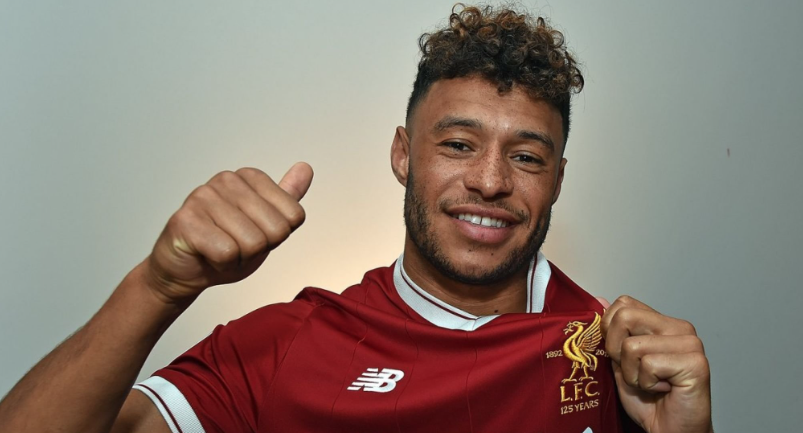
And to some, Alex Oxlade-Chamberlain clearly feels like the well-meaning and eminently sensible present that they needed, but didn’t exactly crave.
Liverpool have bid some serious money on some serious players, and also had those in need of offloading on deadline day – plus, the whole Philippe Coutinho saga, where keeping him arguably became a priority beyond any inbound transfer. And while the Spanish transfer window isn’t shut, I’d be genuinely shocked if he was sold now that no replacements can be procured.
It’s been a weird summer, so why wouldn’t it be a weird deadline week? This has been the summer of the big move, albeit only in line with the rise in TV money, as I point out every summer when prices go “crazy”; and more tellingly, of the big denial.
Clubs are holding on, tooth and nail, to their best players. Well, some clubs are, Liverpool included, whilst the Reds have also been one of the thwarted parties. (You can’t have it all.)
At the start of the summer, centre-back was a clear priority, but that wasn’t successfully addressed, although the attempts to make it happen are now infamous. So the window isn’t perfect.
But had we known the full lay of the land in May, a bigger priority would have been keeping Philippe Coutinho, were we told back then that £130m-or-so would be offered for him by Barcelona. That instantly changes the context quite dramatically. (Had Liverpool landed Thomas Lemar this week, then maybe Coutinho would have been sold. That’s just a guess on my part.)
Full-back was also in need of addressing, but various solutions have been found, to the point where Liverpool have half-a-dozen full-backs, only one of whom was signed this summer.
As I keep saying, each summer is not just about who you bring in from other clubs, but also, who you bring through.
At the start of the season, to add Mo Salah, Oxlade-Chamberlain, Andy Robertson and Dominic Solanke (whose youth career was outstanding), plus nail-down the amazing Naby Keita for 2018, all while losing only the ageing but lovable Lucas Leiva (and loaning out Divock Origi) from the regular playing squad last season … and all the while holding onto Coutinho, would, to me, constitute a very good summer.
Not perfect, mind, but how many clubs can guarantee that they have perfect transfer windows? So much is up in the air, especially if you can’t write oil-backed cheques to make it so much easier. PSG are solving all kinds of problems with their playing staff, only to open up all kinds of problems with FFP; and all with “dodgy” money.
Other centre-backs might have been sought (more on that later in the piece), and admittedly I don’t quite get the aspect of loaning Origi out without someone else coming in, as much as I can see his need for first team football. (My only assumptions are that others can play up front in the more fluid style Klopp likes, and Danny Ings is at least considered for a squad place now. Clearly Ings would suit Klopp’s style, if he is over his injury woes.)
But the signings, to me, are genuinely exciting. Let’s focus on what we have, which has helped towards a great start to the season (even though five internationals are yet to even get a minute of playing time) rather than what might of been.
The trouble is, once we have some things, we soon ignore their worth and want the next new things. Modern society only continues to speed up this process, where being happy with what we have won’t give us the happiness we are being constantly sold.
We acclimatise to what we have over time, by way of the ‘hedonic treadmill’ – the new shoes you bought a few months back, and loved, are now worn in. They’re now inherently less interesting than various shiny new pairs out there, even if the ones you have are the most suited to you, and have already shaped themselves around your feet. The new pairs can change your life, make women fall at your feet (and once there, presumably they can admire those shoes even more closely).
And, as I’ve mentioned many times, it’s been shown that we have a disproportionately negative response to things – focusing more on the bad than the good (because, in primitive life, the bad could do us more harm than the good could do us good). So, people are able to ignore all the good done in a transfer window and manage to find crises where none exist.
And while optimism biases exist too, I’m not the one who goes around saying Liverpool will, or should, be winning the league. My predictions for last season were almost spot-on, if not a fraction pessimistic (3rd-5th, 70 points).
If all the players the Reds signed were done on deadline day it would feel utterly amazing, albeit after months of even more unbearable whining. Instead, they happened in stages, spread out across the whole summer. Some fans are now blasé about Salah, as if he hasn’t just had one of the very best starts to a career at Liverpool in recent memory. In a weird way, fans want more money to be spent, and almost resent bargains.
Instead, it’s all about the next hit, the next high. (And certain social media outlets rely on you constantly clicking for that next high; the transfer window is the epitome of this hitting “refresh” for dopamine.) It’s an actual addiction, which stimulates the brain in the same way addictive substances do, and many people seem more hooked on it than they do the actual games. (As I found on one online article, “Researchers at Chicago University studied the effects of social media. They concluded quite quickly that people presented higher levels of addiction to social media than the need to smoke or drink.”)
There’s no guarantee that Liverpool’s excellent early-season form (four wins and a draw) will continue, but these are results without a single minute of football from Coutinho, Adam Lallana, Nathaniel Clyne and new buy Alex Oxlade-Chamberlain. Those are four players to add to the mix. (And, of course, if Danny Ings finally stays on course to get fit, there’s another good player for the squad there. In a month or so, as he ups his fitness levels, he should be challenging for a place on the bench.)
Seen as such, the squad is hardly paper-thin, and equally, we probably haven’t even seen the best of Liverpool yet this season. Coutinho would obviously elevate the XI, and at worst, the others would massively strengthen the bench. As such, some excellent players won’t even make the 18.
And while the Reds are in some ways light at centre-back without the addition of Virgil van Dijk, and the sale of emergency centre-half Lucas, there’s the re-emergence of Joe Gomez, and still the possibility of using Emre Can there, even if it’s not his ideal position. (Not that you’d ideally want to move him from midfield the way he’s playing, but having so many midfielders makes it an option. And, at 23, he’s getting close to the age where he’s experienced enough to handle that role. Of course, getting his new contract signed has to be a priority.)
While Oxlade-Chamberlain may not be the most exciting signing in the world – at least compared with more exotic names linked to the Reds this summer, several of whom were bid on, and a couple signed – it’s instructive that Man City wanted him last season, champions Chelsea bid £40m for him this week (with hefty wages) and Arsenal obviously wanted to keep him, too.
And so that’s Pep Guardiola, Antonio Conte, Jürgen Klopp and Arsene Wenger – with about a gazillion trophies between them – all wanting Oxlade-Chamberlain. Which, if nothing else, serves as a rather strong reference to his qualities. Landing him has to be considered a coup, given the quality of clubs and managers interested in the player. Irrespective of some fans’ views, the experts at the coal-face rate him highly. He’s not some “perfect” player or a cure-all solution to anything. But he’s pretty damned good. And his physical strength and direct running will presumably suit Liverpool’s football down to the ground.
I don’t think this necessarily solves anything in the “who is the bigger club” dickswinging that fans will engage in, not least because there are various factors at work (managers’ personalities, playing position, current vibe at the clubs), but it does show that Liverpool retain some pulling power, and that the Reds have gained some ground on their rivals in the past 12 months; and if anything, overtaking Arsenal in many respects – certainly on the field, while Chelsea are struggling to land a fair few targets too. Wenger, for so long a proponent of the beautiful game, looks rather lost, his teams fitful and fanciful. Right now it looks like a fight as to who can get off that particular sinking ship, although their time will surely come again, albeit possibly only after a managerial change.
While Jürgen Klopp demands a work-ethic that would make some iron-man triathletes faint, it still looks like fun to play for Liverpool.
On the downside, AO-C’s injury record isn’t the best – although 200 games in six years isn’t exactly bad, with 115 of those in the past three seasons. And his league goals return is clearly poor.
However, he has an excellent goals return when he plays with England’s senior team (6 in 27 at the time of writing), as he had with the U21s (4 in 8), and as he had at Southampton aged 17 (10 in 41).
That suggests that perhaps he hasn’t been utilised to the best of his abilities at Arsenal, which may be the fault of Wenger, or just a question of finding the right spot in a team brimming with attacking talent but little grit; which, of late, has meant Oxlade-Chamberlain being stuck out at wing-back. If you’re prepared to do any kind of tracking back at Arsenal, you probably get deployed in a more defensive role, as Mesut Ozil smokes a cigar in the a-hole. Granted, AO-C didn’t do himself any favours at the weekend, but it was a team drained of any organisation and, well … soul. He’s been dragged down by the Gunner malaise.
(Incidentally, Arsenal look exactly like Liverpool did after Brendan Rodgers received his stay of execution following the disastrous end to 2014/15: some token backroom changes, but the same issues remaining, and a kind of phoney amnesty as everyone almost waits to get angry again, and for the axe to finally fall. I was on record for being all for keeping Rodgers, of course, unless someone like Jürgen Klopp came along; change for change’s sake is rarely helpful, if you then get stuck with a new unsuitable manager. But by October, Klopp did come along. And as pathetic as some of the criticism of Rodgers’ new backroom staff was that summer, it hardly felt like lighting the blue touch paper. Equally, nothing about Arsenal feels fresh and exciting – it seems stale, old, unfocused. And as with Rodgers, the fanbase was always going to jump straight into to “unrest” mode at the first bad results. But I digress…)
Oxlade-Chamberlain turned 24 a couple of weeks ago, so is no longer a “youngster”, but equally, he’s at a really good age to go up a level or two.
Equally, he’s clearly ready to do a job now. And knowing so many of the players from the England camp may help him settle quickly.
While Liverpool haven’t really gone for the “old and established” route since Klopp’s arrival (signing only one older player, a reserve centre-back), the club also haven’t bought that many kids, perhaps in part to show trust in those coming through, but also because it’s a fairly young squad overall, with hardly any 30-somethings; and right now, none in the team. Indeed, if you’re 28 in this Liverpool side you’re an old man. Lucas Leiva has finally gone, leaving just Ragnar Klavan and James Milner, the old outfield men at 31, both of whom are now mere benchers.
There seems to be a happy medium with the signings, with a glut of 24/25-year-olds (at the time of their transfers) like Sadio Mané, Gini Wijnaldum, Joel Matip, Mo Salah and now Oxlade-Chamberlain. No singngs have been in danger of melting, beyond Klavan. Andy Robertson is 23, and only Dominic Solanke is both young and inexperienced – but also, big enough and strong enough to be part of Liverpool’s first-team plans, if not an immediate starter. (And he had a season in Dutch football aged 17, so he’s not completely raw.)
Virgil van Dijk – perhaps the main target of the summer – has just turned 26, while Naby Keita is just 22, but also, clearly ready (although he has to stay for another year in Germany).
With young players like Trent Alexander-Arnold and Joe Gomez coming through (and Ben Woodburn behind them), and with Marko Grujic still only 21, there’s less of a need to buy in the 18-22 age-range right now, where a season or two of growth as a player (and as physical specimens) may still be required. The 18-22 age-range frequently feels to me like the best time in terms of value for money to buy players, as they are often a little under the radar, but you have to be patient, too. If they aren’t under the radar, the fees can be huge.
You only have to see what’s happening with Kylian Mbappe to observe how a talented 18-year-old can present both mouthwatering potential mixed with a possible 15-17 years of football ahead of him (which either you get, or you sell him to recoup money on) and, as such, command a massive fee; albeit in this case via some nefarious loan. The worry then is giving them too much money too soon, and they lose their hunger. But as noted, Liverpool are not short of younger players. Instead, the signings are youngish, and clearly still hungry. The club is at once, with this summer’s spending, planning for its present and its future. Pretty much all of Liverpool’s best players are 25 or 26, not 29 or 30.
Interestingly, I was asked in the comments section on this site (which is all behind the paywall) what the £12m Arsenal paid for the 17-year-old Oxlade-Chamberlain would now equate to, using our Transfer Price Index inflation model. The answer? £34.7m. So to pay £35m for him (rising to £40m) seems eerily accurate, if perhaps coincidental, given the different factors at play in 2011 and now. The outrageous potential of a bullish 17-year-old has been lost, but replaced with 190+ games for Arsenal and 27 caps for England up to the point he turned 24. So, instead of pure potential he now has pedigree.
Equally eery is that the transfer record for a fee paid by an English club in the Premier League era is £137.8m, and the fee Barcelona were quoted as offering for Coutinho was, er, £138m.  But these fees are in 2016/17 money, so do not take this summer’s inflation into account. This summer’s deals will go towards calculating 2018 money, and – as a total guess – the c.£137m (TPI) fees paid for Andriy Shevchenko, Wayne Rooney and Rio Ferdinand over a decade ago could be closer to £160m when put into this market (which feels a bit crazier than others, but that may just be recency bias).
Again, it may all be coincidental. And none of it gets anywhere near the £226m Cristiano was sold for – the highest amount in 2017 money in the Premier League era for ins or outs – back in 2009 (although that again was mirrored in the Neymar fee of around £200m, for a player in his mid-20s).
The £35m-40m Liverpool paid this week for Oxlade-Chamberlain, 24, is far less after inflation than the Reds paid for Stewart Downing, aged 26 in 2011, which works out at £57.8m in 2016/17 money – but could easily be £70m in 2017/18 money. (We’ll only calculate the latest inflation once the January window closes.) Downing was older, with far less of the potential the Reds’ latest signing offers. This feels like much better business.
Perhaps the Ox (if we must call him that) had gone stale at Arsenal (along with about half a dozen others), and you’d hope that the better fitness levels found at Liverpool – and indeed, Klopp’s energy and the team’s upward trajectory – would help him to become a stronger, more dominant player. That said, he has to get in the team first. I’m not quite sure where he fits in if everyone is fit and available.
But as with many of Klopp’s favoured players, he’s versatile. He certainly won’t be far from the XI, but may again find himself filling in here and there.
The final part of this article, which includes a look at the other ins and outs, is for subscribers only. See below for details of how to sign up.

Monday, August 28, 2017

Liverpool Look Infinitely Better Already By Paul Tomkins

In By Paul TomkinsFreeSubscribers Only
https://tomkinstimes.com/2017/08/liverpool-look-infinitely-better-already/
Improvement is never guaranteed in football, but this summer it felt to me – as I stated, over and over – that the club was building steadily and sensibly, with a clear vision.
Instead, the usual tiresome transfer panic overshadowed what Jürgen Klopp actually does: improve players, and improve teams.
The word ‘infinite’ is perhaps not ideal in this context; and even being ‘twice as good’ does not get you twice as many points. There’s a law of diminishing returns towards the top of the table, but the Reds look capable of beating anyone; and crucially, taking apart deep, packed defences as well as those who leave themselves open. Even the opening day draw against Watford should have been a win, given the late, clearly offside equaliser that came with no time left to overhaul the injustice of officials not understanding the rules.
Already, Liverpool have scored several of the best team goals I’ve seen the Reds score in a long time. Sadio Mané’s goal at Watford was from wonderful interplay against a deep defence, whilst Emre Can’s side-footed volley against Hoffenheim came at the end of one of the best counter-attacks you’ll ever see. The Reds followed this against Arsenal with three more lightning breaks, two of which were once again beautiful team goals.
Klopp has never been a chequebook manager, but when he has bought, he has – along with those who work with him – targeted very specific players. They go into the side with a very defined role. As such, the transfer hit-rate of the Reds since last summer seems beyond all the usual hit-and-miss ratios I so often talk about. New signings slip in as if at the club for years.
As more time passes, and more new buys effortlessly fit in, I can’t believe that this is an accident. Obviously some of the buys are young players for the squad more than the XI (Marko Grujic last season, who got injured anyway, and Dominic Solanke this season), and cannot be judged as successes or failures yet, but already Mo Salah has joined Mané, Matip and Wijnaldum from last season in making a real impact, as a first-teamer, in his debut season. Not only has Klopp improved a perceived flop like Roberto Firmino to the point where he’s one of the best unsung players in Europe, but those brought in are having a similar impact.
At times, people think Klopp and co. should be more open-minded on the transfer market: have back-up plans, alternative targets. And maybe that’s true (and maybe they do, anyway). But anyone targeted is done so for a very clear reason. Good players who don’t do what Klopp wants will not be considered. There simply will be no fudging on that.
And so, with no Philippe Coutinho, no Adam Lallana, and no “recognised” right-back – and apparently about 15 signings too few – the club have kept back-to-back clean sheets in the league, and scored four goals against both Hoffenheim and Arsenal. Four wins and a draw from the first five games, given the transfer request of Coutinho less than 24 hours before the start of the campaign and the squeeze that the Champions League qualifiers puts you under, is fairly remarkable. Both teams this week were despatched with ease, with the score-lines flattering to the visitors to Anfield; whilst just over a week ago, the biggest bogey was buggered, as Palace were finally bested at home (the bastards). Suddenly the impressive preseason form seems like a legitimate predictor of the season.
I was lucky enough to be in my old season ticket seat on Wednesday, and the Reds were scintillating. Hoffenheim were arguably naive, just as Arsenal were half-arsed, but they needed despatching. And it’s no coincidence that Liverpool’s front three not only do great stuff going forward – with skill, vision and pace – but they harry and win the ball back too. Klopp doesn’t compromise on this. He refuses to buy and/or use lazy players. This means that everyone knows where they stand (while Arsenal players seem to know where they stroll).
An obvious reason for improvement this season at Liverpool was the age of the side – only Spurs were younger (and they had the upheaval of Wembley this season to put a spanner in their psychological works). And the fact that this is only the start of Klopp’s second full season in charge, and that he only started buying players in the summer of 2016. There were no key players melting, but of course, the Coutinho situation was a huge blow.
To me, as I said in the summer, it seemed reminiscent of the building work done by Gérard Houllier and Rafa Benítez, where a squad was assembled over time, with tactical plans refined, rather than an instant league impact. There was a period of assessment, then very targeted signings. Perhaps Houllier and Benítez saw a greater churn in their early years, and brought in more cheap deadwood to bolster the numbers, but they nailed their key signings in those early years, just like Klopp appears to be doing.
Mo Salah was logically going to give the multiple benefits of goals and pace, and in turn, free up Sadio Mané from the attentions of the opposition’s quickest defender. There’s nothing worse than a told-you-so article, but I made all these points before the season kicked off. Five or six younger players were clearly going to move from making up the numbers to being valued squad members (based, to me, on the quantum leaps they made in the U23s in the back-end of last season, after getting tasters of first team football); indeed, in the case at right-back, two have become valued first-team players who do far more than just fill in.
It could still go wrong; it’s obviously early days. Injuries, loss of form, a Loris Karius overhead-kick own-goal: it could all happen. But Liverpool seem better equipped to deal with whatever is thrown at them. For the first time the squad is big enough for Klopp to make rotations without clearly weakening the side. A big part of that is those two youngsters alternating at right-back. That said, the squad could be bigger still, but there won’t be half-arsed solutions.
And while the individual defending may still be iffy at times, the pace of the “reborn” Alberto Moreno has helped push opponents back, along with the unplayable pace of Salah and, of course, the speed of Trent Alexander-Arnold and Joe Gomez.
In “TAA”, the Reds have a better attacking full-back than Nathaniel Clyne, and in Joe Gomez, the Reds have another exceptional young player who, absolutely critically, gives Liverpool a third six-footer in the back-line, and while positionally astray at times as he learns the position (he’s still only played less than a dozen first-team games there), is probably a better “defender” than Clyne. Indeed, Gomez made several vital blocks and interceptions in the Liverpool box on the rare occasions Arsenal put anything together yesterday.
With Jordan Henderson and Emre Can adding size in the centre of midfield, suddenly Moreno is not a short-arsed liability but an express train on the overlap. Teams just can’t put him under the kind of pressure they did before. Now, he can put them under pressure. Meanwhile, Andy Robertson has played just one game but was arguably man of the match.
The second half of this article is for subscribers only. See below for details on how to subscribe.