Monday, August 3, 2015

在大马成功的八 - 原载《南洋商报》

在大马成功的八招
(玛丽娜马哈迪) 当这个国家的每个人都是指导他人的专家的时刻,虽然完全没有人要求,我也想参加一份,慷慨提供我的意见,给所有那些期望加入任何种类的纸箱或者厨柜的人。如果跟我们周围任何熟悉的东西有任何相似之处,自然纯属巧合。
首先,请别再想由于你有任何专长,因此有人要你或者需要你。谁理你是否拥有“如何使任何东西变好”和“如何使任何东西变得更好”的双学位呢?你所需要的是“如何使你的上司感觉良好”的哲学博士学位,副修“如何使你的上司显得真正良好”。如果你擅长“如何清理一团糟”,尤其是如果涉及摆脱“难缠的人”,也会有帮助。
其次,你必须去面试这个职位。永远别期望像灰姑娘那样脱颖而出。别忘了她并未真正受邀参加舞会,她的继母的两个丑陋女儿却受邀。她们为此非常努力,确保她们引人注目。
所以,设法受人注意,如果这意味着当众出丑也无所谓。谁理你的音容是不是像个蠢人,只要那个可能是你上司的人喜欢?通往职位与不义之财的道路布满吹嘘与排场!誓表忠心,即使并没有人要求你这样做!此举能加分。
美国人可以我们也可以
第三,总是表现谦虚,说你从未想过这一切,不过一定是“上苍之佑”。哪个神志正常的人会质疑“上苍”要什么?“他”一定已通过他的代理人发言———即将是你的上司。乔治‧沃克‧布什(小布什)说上帝使他当总统,在地球上执行祂的旨意。当然,如果一个美国人可以这样宣称,我们也可以!
第四,别人给你什么,别挑剔。就只是感谢!这究竟有什么关系?都是好处来的,像一所华丽的房屋(一定要有装修预算),有司机的漂亮汽车,你和夫人的“一等”旅游,以及所有各种各样东西———以前你听过别人讲,不过现在可以亲自体验。即使工作非常沉闷,那又怎样?别的人可以替你阅读所有的报告,给你一篇摘要。噢,如果你遗漏报告里的一些东西,可以归咎很多人,甚至是派送文件的书记。为什么要担心,你时来运到了!
第五,现在你得到了职务,你的工作就是微笑,点头。卖力的点头。一直这样。此外,尽可能跟你的上司一起拍照,最好是非常仰慕地看着他。如果你可以举起一面适当的、崇拜的标语牌,就更好了。虽然一些人发觉这并不保证工作安定。也许练习吻手,以资替代。
没有一位大人物没随员
第六,我们别忘了你是一个配套的交易,其中包含你的配偶。好好训练她,因为她的工作跟你的一样重要。跟你颇为相反的是,她的工作不是跟她的上司竞争。所以,如果你要购买很贵的东西给她(现在你能够了!),确保别让她在上司面前配戴。尤其是如果她配戴起来显得相当魅力四射。支持本地牌子,让你的妻子穿戴。把国际入口货让给她的上司,教导她叨念适当的仰慕之词。
第七,看过电视连续剧《明星伙伴》(Entourage)吗?一支随行团队是你所需要的。
让形形式式的人包围着你,让他们做低薪琐碎的工作,不过给予适当的衣服,穿起来像是重要人物。没有一个“大人物”是没有随员的,拿手袋,拿购买的东西,在机场为你办登机手续,这类事情。你再也不必自己做一件事。
第八,自己成为随员的一分子。你一直处于上司目光所及之处,是非常重要的,因为你不要他忘记你是存在的。或者他下一次清理櫥柜时,忽略了你。所以,到处都跟着他;毕竟这是你的主要工作。你的妻子要当她上司随员中的女侍,这也是她的工作,所以,如果她受召服务,你要祝贺她。这将是有回报的。
就是这些了,在我们亲爱的国家,如何在生活中成功的八个窍门。对于那些必须每天真正工作来生存的人,祝你们好运。有时会掉下一些碎屑。
原载《南洋商报》在大马成功的八招

Monday, July 27, 2015

He did it again...who? Jose Mourinho

Seriously? But at least he admitted Chelsea did the same when he is on board 11 years ago..but have Chelsea stop "buying" title? No, they buy but just don't need to buy heavy, when you are at the top, with the financial muscle, you just need to buy one or two players each year to replace the old legs or amend the mistake made previous years.

Plus, mind game from him, if he lost this new season, he can say, see i told you others buying the title....

Clever, very clever...Little Horse again? Come on....


http://www.espnfcasia.com/barclays-premier-league/story/2536879/chelsea-jose-mourinho-premier-league-rivals-buying-the-title

Chelsea boss Jose Mourinho: Premier League rivals 'are buying the title' By ESPN Staff
Chelsea manager Jose Mourinho says that the contenders for the Premier League title are trying to buy silverware.
The current Premier League champions brought in Asmir Begovic and Falcao this summer for minimal fees and have not spent more than £30 million on one player since signing Fernando Torres from Liverpool back in 2011.
The Blues have still spent significant cash on the likes of Diego Costa, Cesc Fabregas, Eden Hazard and Nemanja Matic in recent years, but Mourinho claims that others are now trying to mirror the kind of spending that he enjoyed when he first took over the club in 2004 and lavished over £150m on players like Didier Drogba, Shaun Wright-Phillips, Arjen Robben and Petr Cech.
"In the beginning of Mr Abramovich coming to Chelsea, Chelsea was buying the title," Mourinho said after the friendly win over PSG on Saturday. "Now, they are buying the title. All of them, they are buying the title.
"It is up to us to be strong and to fight them and, obviously, to try and win it again, even without the big investments."
Manchester City spent £49m alone on bringing in Raheem Sterling this summer, while Manchester United and Liverpool have also spent large amounts of money on improving their squads ahead of the new season.

Sunday, May 31, 2015

ABCDEFG & HIJK by Others

有个女孩问男友:为什么英文的排列是ABCDEFG? 
男友回答:因为 A boy can do everything for girls. 
女孩听完非常感动,决定这一辈子非这个男孩不嫁。 
但是….她忘记了英文接下来的排列是HIJK. He is just kidding… 

Friday, May 29, 2015

Rodgers, and Extenuating Circumstances by Paul Tomkins

http://tomkinstimes.com/2015/05/rodgers-and-extenuating-circumstances/

By Paul Tomkins.
Having spent the past few days undergoing psychotherapy, hypnotherapy and even the brain-wiping treatment used in The Eternal Sunshine of the Spotless Mind (complete with Kirsten Dunst dancing on my bed), I can still recall a vague sense of something really bad happening on a football pitch on Sunday. The numbers ‘6’ and ‘1’ keep popping into my mind. It’s a mental stain that just can’t be erased, even by the computers of Mark Ruffalo and Tom Wilkinson.
Despite this, I see quite a few (if not all) of the struggles this season as being beyond Brendan Rodgers’ control – or, at the very least, he faced difficult situations where a judgement call could easily go wrong. You can all then decide for yourselves what, in addition to these extenuating circumstances, the manager messed up on, and whether more could have been done (just do so without resorting to hindsight). You are also free to reach your own conclusion about whether Rodgers should stay on as manager or not.
But remember, you can always make criticisms of any manager – not even the best ones are perfect. When things are going well for a manager his qualities will be extolled, and when things are going badly those same qualities, which won’t have changed, will be labelled as flaws.
It’s fair to say that I can’t make a watertight case for Rodgers staying, after the final two performances punctured holes in some of my arguments, but I do think a sense of perspective is called for, now that dust has settled on what I described as a clusterfuck of a campaign. (I’ve calmed down a bit since then, but it’s still been a car crash of a season.)
In many ways it reminded me (as I’m sure it has others) of Rafa Benítez’s final season: sale of pivotal player; a bad start in the league following the high of being runners-up; group stage exit of the Champions League; money spent on an absent high-profile Italian international; and a manager trying to remain positive and bullish, and winding up his detractors in the process (when, if he was negative and defeatist, as Hodgson was, everyone would probably go even more crazy). Plus there was Rodgers’ team finishing 6th with 62 points and Benítez’s team finishing 7th with 63 points.
You sensed things becoming untenable, but mainly as the fan-base sliced itself right down the middle. Rafa had a better record of success behind him (the trophies were earlier in his tenure, but his best team was five years in – and it won nothing), but was at war with cowboy owners and Cuban-heeled execs.
Rodgers has better custodians, but they aren’t rich by some rivals’ standards, and in trying to do the right thing (Director of Football, then a transfer committee) they’ve ended up with what seems like a fudged vision, as they also attempt to stay within the FFP guidelines and find ways to get the best value for money. They’ve been sensible in their approach to the transfer market, rather than reckless, but too many players have failed to settle quickly enough (or at all). I believe that there’s some sound long-term investment in players going on, but the ones old enough to be in their peak now have also struggled, and that’s been problematic. (But even older players can take time to adapt.)
Defending a manager after a mediocre or relatively poor season is not ‘defending mediocrity’ – because obviously those who stick by a manager in such circumstances believe that things will get better. It might not, of course. But then nothing in football comes with any guarantees. And no one said 2013/14 was mediocre, so it’s not like the manager only has mediocre seasons to his name.
Anyway, here are a few things that I think almost any manager would have struggled with:
– The transfer situation – all managers have poor periods of buying, and indeed, Rodgers was not entirely responsible for the transfer activity. When people lump all the blame at his door it seems unfair. He takes some of the blame for the failures (especially if any were driven by him), but unlike most managers, he cannot take all of the blame (or indeed all of the credit for the ones that work out) because he is merely one member of a committee. It’s his job to make these players look good on the pitch, but better managers have failed to do that with better players. (Mourinho and Shevchenko spring to mind.)
– Last season was unsustainably good. There was always likely to be a drop, because everything seemed to go right. This season an unusual amount seemed to go wrong.
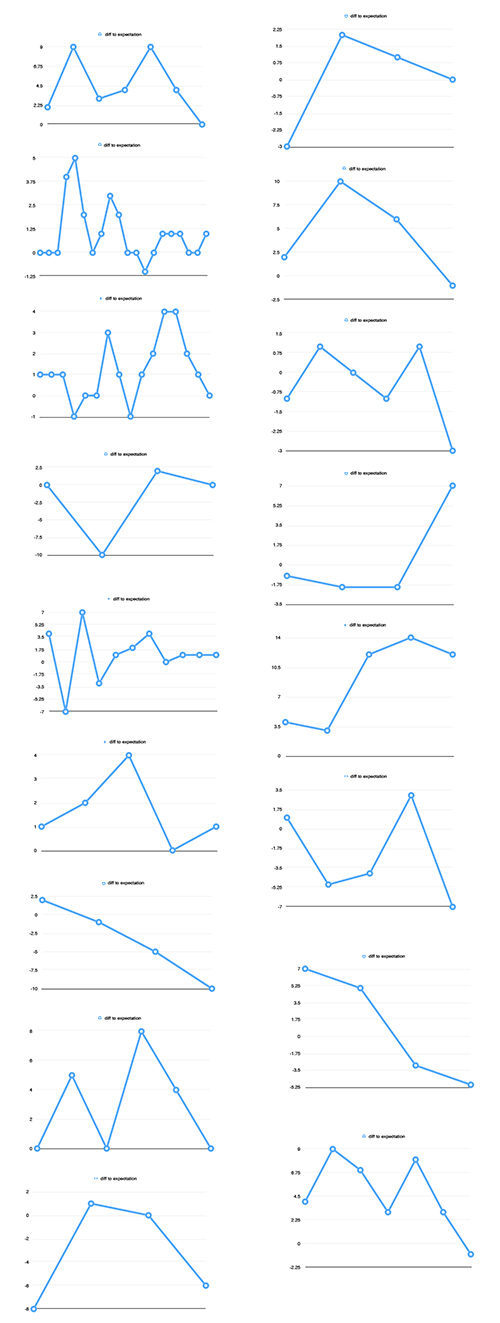
– Managers’ fortunes rise and fall pretty rapidly. Too rapidly, in fact. Below is a graphic for the Premier League’s longest-serving managers (Ferguson, Wenger, Moyes, Benítez, Houllier, O’Neill, Keegan, Pulis, Allardyce et al) where at least four seasons were spent in the Premier League at the same club – and shows their season by season performance at that club against expectations (where they should finish based on the resources they had, with those resources obviously changing over time). It’s not meant to be individually analysed: it doesn’t matter if you know who is who – the idea is to get an idea of the dramatic flux in fortunes. (And Ferguson’s massively fluctuating first six seasons are not included.)
ManagerSwings-1
(As an aside, earlier in the season Carlo Ancelotti’s Real Madrid won 22 games in a row.Twenty two! A bad run in the new year, and a couple of key defeats at the wrong time, and he ended up trophy-less and out of a job. Similarly, it seemed that Rafa Benítez was going to get sacked by Napoli after a bad run in the new year, until he took his team to two semi-finals, at which point a new deal was mooted by the owner. They then narrowly lost both of those semi-finals, and suddenly he was under pressure. In Germany, Jurgen Klopp’s Dortmund recovered from being bottom of the table in the winter to finish 7th, but still 33 points off top spot. Three great managers, three hugely inconsistent seasons. Add Louis van Gaal, with the biggest spend in the summer and the costliest squad in the league, and yet failed to inspire anyone, and that makes four.)
– The increase in cup games Liverpool ending up facing was always likely to result in negative impact on league, if not quite to the level we saw. My research shows that: on average, playing a lot of cup games harms league form, and, as you’d expect, it harms small and medium-sized squads more than large ones. It also shows that 20 cup games – which Liverpool played – is only suited to a bigger squad; and that a sudden increase in cup games (in this case, a quadrupling) usually results in a bigger loss of league points and a drop in league position. (Research findings to be expanded and made public this summer.)
– Suarez was hard to replace – harder than I anticipated. It was never going to be easy, but you can build a better team by selling your best asset if you get a good price. Liverpool did it with Keegan and Rush, as just two examples. However, a bus-load of mediocre players (if that’s what you end up with – and I’m not saying that’s what Liverpool got) won’t help the first team as much as one genuine world-class star. But it’s never just about the short-term, as we saw with Henderson and various others before him, when looking mediocre for a season. Liverpool’s new signings, Can aside, had mediocre campaigns, but that doesn’t make them mediocre players. The issue is, are Can, Markovic, Moreno and Lallana (plus Origi when he arrives) going to be important players over the course of their Liverpool careers? I believe they can be, but as with any signing, you can never say anything for certain.
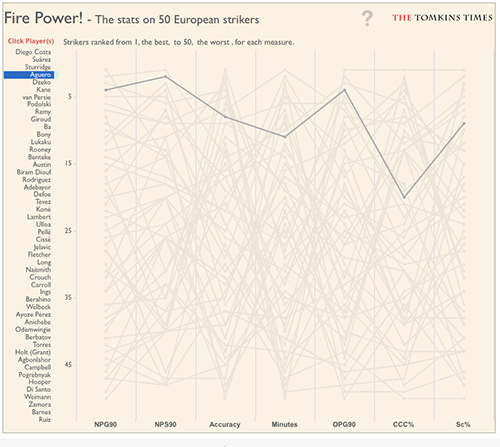
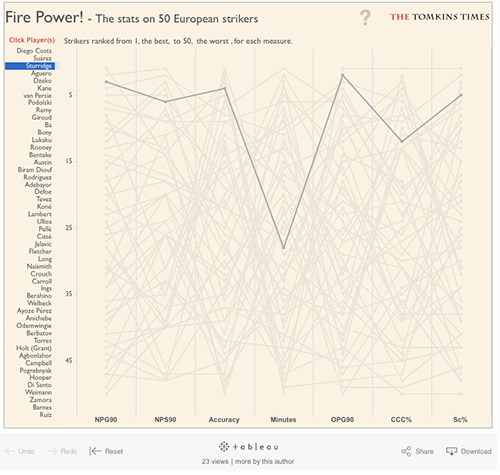
– Statistically, Daniel Sturridge is as good as Sergio Aguero in pretty much everything bar minutes played. And losing Sturridge for so long was a bodyblow. See the comparison below, or click on the link to look at the performance of 50 Premier League strikers over the past three seasons (data collated by Dan Kennett from published Opta sources, and converted to Tableau by Robert Radburn. Note: title to interactive graphic should be 50 Premier League strikers).
Aguero
Aguero
Sturridge
Sturridge
– Sturridge was always likely to miss a third of the season with injuries, but he barelyplayed a third of the season. Andrew Beasley posted this on TTT yesterday: (We took over 2 points per game from the 12 games Sturridge featured in … Those 25 points were in mostly tough games too – only one game against a team who finished below 12th in the table, and an average opponent placing of 7th. A third of his games were against the top four.) And let’s not forget, he was barely match-fit for any of those games.
- The decline and impending departure of a bona fide legend. I felt that Gerrard’s heart just wasn’t quite in it anymore – and by it, I could just as easily be referring to his belief in himself – with the way everything crumbled for him between April and July last year. (Which is why, for me, it was so nice to see him looking happy in Dubai as Liverpool danced and sang in a tight defensive formation.) The decision to quit, which had been rumoured since the Real Madrid away game, became a distraction, certainly later on in the season as the end drew near. Along with Sturridge, he was still probably the best finisher at the club, but there wasn’t an ideal position for him to play as he approached 35, and Liverpool’s form with him in the side was woeful, compared to the good form when he was absent. “With and without” stats can be misleading, but the difference is so enormous that you have to wonder if it has some significance.
(A guy named Jonathan Alpert sent me the following comments via email: “Gerrard started 25 Premier League games. Of those we won just 8, drew 8 and lost 9 with an average points per game of just 1.32 and a win ratio of just 32%. We scored 32 goals and conceded 38 with a goal difference of -6. Of the 13 Premier League games where he did not start we won 9, drew 1 and lost 3. Our points per game average was 2.15 and our win ratio was 69%. We scored 20 goals, conceded 10, for a +10 goal difference. Extrapolated over a season, without Gerrard we could have achieved 82 points, enough for 2nd place. With him for all 38 games, we would have achieved 50 points, which would bring us in 10th.”)
- Sterling’s contract issues and his crash in form. There was something shocking about a 20-year-old ‘playing’ the media in a demand to leave Liverpool. While he’s allowed to be ambitious, you got a sense when Luis Suarez pulled the same trick two years ago that he had ‘paid his dues’, and was at an age – and what seemed a peak of performance (although, of course, he got better) – to at least try that stunt. Suarez wanting out was a big blow, but understandable; Sterling wanting out just felt a bit insulting. He was playing very well until he went on the BBC without the club’s permission. The whole saga became one more unnecessary sideshow.
– The refereeing. We always feel our team is harshly done by, but last season there seemed to be a fair few beneficial decisions – or, at least, fair ones – whereas this season I lost count of the number of appalling refereeing displays. Sterling, in particular, got very little from referees, and even at the weekend the referee waved away three blatant penalties, with it now apparently okay to trip Lallana in the box too.
– Coping with injuries and suspensions. People over-fixate on issues like playing people out of position in times of need. Everyone seemed fed up with Glen Johnson’s deterioration, and yet also went mad when Emre Can played at right-back. Well, who else was there? Jon Flanagan has been injured all season. That just left Javier Manquillo – who started the season brightly but faded (he looks a good defensive full-back, but very raw). It’s hardly like the manager was leaving out the equivalent of Paolo Maldini. For me, there is no such thing as a ‘correct’ position. They’re footballers. They have a ‘best’ position at given points of their career, but does Guardiola play Lahm at full-back? No. What about Mascherano at full-back under Rafa (the little man was outstanding) and at centre-back at Barca? (Unlikely, we’d have thought given his height, but brilliant.) Managers have to get the best group of players onto the pitch in the strongest mix they can find. Sometimes that might mean players in their best position, sometimes not. As long as you don’t play a midget in goal or a goalkeeper up front, you’re basically asking footballers to work within their overall abilities.
– The team was/is too young. I’ve covered the catch-22 of this before. Established world-class stars like Falcao and Di Maria were out of Liverpool’s price range and wage structure (which had to be kept within FFP limits), and the sensible idea is to find these types before they’ve hit peak value, not after they’ve past it. But then potentially great players may never become as good as Falcao and Di Maria … not that Falcao and Di Maria, at 28 and 26, turned out to be as good as Falcao and Di Maria, and were arguably little better than Balotelli and Markovic this season. However, Liverpool do lack experience overall, and very young teams rarely flourish. The key is to keep them together so that they develop together, but that’s never easy, either.
– People talk about buying “ready-made stars” but they flop far more often than people realise (which I’ve proved on several occasions – only six of the eleven costliest Premier League signings, after inflation, succeeded). FSG have the right basic strategy, but so far either the wrong individuals have been signed, or they haven’t yet had a second season, which is often when ‘duds’ become successful signings (or fall totally out of the picture). The problem this season hasn’t been youngsters like Can and Markovic but those new players aged 24-32.
- Having said that … Balotelli. Just, Balotelli.
Conclusion
Rodgers cannot be responsible for this season’s failings and yet also be lucky for last season’s incredible number of wins. Either you believe in the effect of a manager or you don’t. You can’t choose one of the seasons and ignore the other. However, Luis Suarezobviously played a key role last season – it wouldn’t have happened without him – and Rodgers made mistakes this season. Rodgers had some luck last season, and he lacked some luck this season.
That said, Suarez heavily credits Rodgers for helping him to improve, and it’s not like he’s saying it because the man is still his manager. There’s no pressure on him to say anything at all about Liverpool, now he’s at Barcelona. Suarez’s form improved season-upon-season under Rodgers, although he was a great natural talent; and obviously Rodgers has to shoulder some of the blame over the failure to replace him, but not all of it. If Rodgers helped Suarez to be more effective – and the player thinks he did – then the manager gets credit.
People talk about Rodgers’ tactics, and obviously there are concerns there. But equally the work done with Suarez last season, regarding how to time his runs, and the different positions to pick up, is all tactical. Liverpool broke a clean sheet record under Rodgers this season, but defending as a unit whilst being able to attack effectively is a hard balance to strike – and that would be an area for improvement overall.
In fairness to Rodgers, who wasn’t behind Suarez’s departure, he gave Balotelli a fairly decent run of games, but if the player wasn’t training well, or doing what was asked of him in games – as well as not scoring goals – then the manager has a right to leave him out (even if at times the Italian seemed a little harshly treated from the outside).
To me, neither last season nor this can be ignored. So you mix them together for anoverall performance level. And if you do that, it doesn’t make his job seem nailed-on (as it did 12 months ago), but it doesn’t have to result in a sacking. You can of course include his first season, for the full picture, but you also allow some leeway to a manager in his first campaign. (Just not to Roy Hodgson, given how terribly it was going throughout his entire brief tenure.)
You can argue that another manager may have done things better, and that’s true – although it’s easy to invent alternate realities where everything goes right. You will always get mistakes in the transfer market, and you will always drop ‘silly’ points, because that’s how things work. (That said, Liverpool should not be shipping nine goals in two games against Palace and Stoke.)
Rodgers could perhaps have left Gerrard out more often this season, given the far better results without him, but that could have created its own issues and tensions. Next season we’ll get to see what Liverpool are like without Gerrard’s decline being an issue. Liverpool will miss the Gerrard of 1998-2014, but I’m not sure they’ll miss the 2015 vintage.
On transfers, if Rodgers was the driving force behind the signings of Lambert, Lovren and Lallana – as some people suggest – then he has to take the blame for those not working out. While I’m not Lallana’s biggest fan, there’s definitely a good footballer in there – it’s just a case of whether his excellent footwork amounts to as much as it should for the fee and his age (as he’s not a kid). I expect him to be better next season. Lovren is also a better defender than we’ve seen this season, but his utterly astonishing inability to play 90 minutes without making at least one horrendous error undid any good periods he’d have in matches, when it looked like he could be a commanding centre-back. Lambert was a decent gamble at £4m (as 3rd or 4th choice and a potential Plan B) but his legs just weren’t there, and he looked too nervous in his early games to stake a claim for a regular spot.
On the corrosive Sterling issue it’s hard to see what more Rodgers could have done.
On the issue of playing too many cup games, people will always moan if managers don’t take competitions ‘seriously’ enough. Obviously the Champions League is the elite level, where you want to succeed at all costs, but as in Rodgers’ first season, I’m not sure there was enough rotation, especially in the League Cup. But I also appreciate the pressure a manager can be under to win trophies and, in difficult times, simply to win any game they face. And I don’t know have the scientific data on squad fitness issues, and have no way of knowing whether or not training is suited to the requirements.
On referees, Rodgers could have been more like other managers and drawn attention to their incompetence. A few years ago Howard Webb spoke of being generally intimidated by Alex Ferguson, and Jose Mourinho is always looking to put pressure on officials. Ideally the Premier League would fully crack down such behaviour, but while they don’t it seems that, as ever, Liverpool are too nice about these things, both on the pitch and off it. Until you get points (and not just a Europa League spot) for fair play it seems that the Reds are harming their chances in comparison with others.
Overall, I certainly wouldn’t be making a case for Rodgers to stay based on this one season, and the Stoke game remains the stuff of nightmares. But his body of work at Liverpool is still good, with an excellent second half to his first season, and the amazing thrills of his second (lest the revisionists forget), and a period in his third where the team had a strong identity.
His overall record obviously isn’t brilliant, and that leads to understandable fan daydreams about people like Ancelotti and Klopp. Even if you subjectively level out Rodgers’ overall record to be what you describe ‘average’, it contains highs and lows, and not just a constant humdrum predictability. The lack of consistency is a concern, but each season has produced periods when things at least briefly looked exciting, and 2013/14 was way better than anyone was expecting.
Only time will tell if this was just the kind of season-long dip that pretty much all managers experience, or if Rodgers has passed his sell-by date with for the job in hand. If he goes he goes, but let’s try and be fair in our assessments.
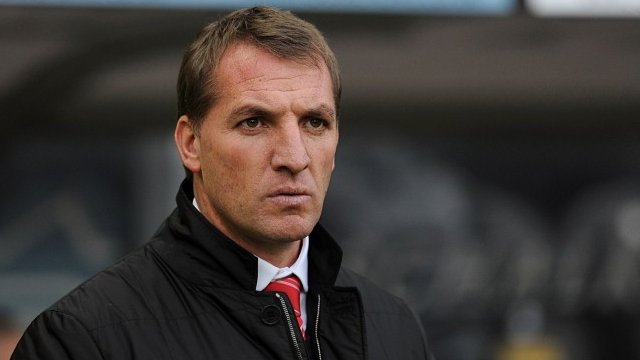
Rodgers-2015

Sunday, April 12, 2015

学中文 001

http://jalong.blogspot.com/2014/12/blog-post_20.html

胸口摸得着的尺寸叫-胸围,
胸口摸不到的尺寸叫-胸襟

眼睛看得到的地方叫-视线,
眼睛看不到的地方叫-视野

嘴里说得出来的话叫-内容,
嘴里说不出来的话叫-内涵

手上比划出来的动作叫-手势,
手上比划不出来的动作叫-手段

脑子里测得出东西叫-智商,
脑子里测不出的东西叫-智慧

耳朵听得到的是-声音,
耳朵听不到的是-声誉

证件上印出来的叫-文凭,
证件上印不出的叫-文化

温度计量出的叫-温度,
温度计量不出的叫-温暖

手指写得出的文字叫-文章,
手指写不出的文字叫-文化

镜子里看得到的是-自己,
镜子看不到的是-自我

金钱衡量出的是-价格,
金钱衡量不出的是-价值

存款显示出来的叫-财产,
存款显示不出来的叫-财富


牵挂在嘴上的叫-情话,
牵挂在心里的叫-情感

Good Timing 002 Fire Bunny


Thursday, April 9, 2015

We’re All Gonna Live Forever! By Paul Tomkins

http://tomkinstimes.com/2015/04/were-all-gonna-live-forever/

By Paul Tomkins.
Last night’s piece, “We’re All Gonna Die!” provoked a lot of debate, much of which took place on Twitter. There were a lot of interesting comments, plus the usual complaints. (And of course, the usual excellent discussions in the comments on this site.)
I figured it’d be easier to write a (fairly) short addendum on here, rather than reply to various queries in a medium not suited to getting across complex ideas.
Obviously the original piece was fairly long, but it deals with a pretty big issue; it wasn’t 4,500 words on why Alberto Moreno chooses to have a stubbly beard. People moaned about it being far too long, and yet loads of other people asked why this or that wasn’t covered; the kind of things that would have made it 9,000 words long. I always try to cover all bases, but you sometimes overlook things, or simply forget to include them.
I worry that I occasionally repeat myself, but it just happens that some of those ‘omissions’ were covered as recently as last week. While I’ve been doing this too long to let general criticisms bother me – you don’t like my writing? tough shit – I do like to address any misunderstandings people may have, especially if I’ve not explained something properly, and therefore I didn’t do my job properly. (I’m well aware that I can’t make stupid people smart.) I usually try to challenge my own theories as I write and edit a piece, constantly testing them, but interactions with others can help to solidify ideas, and to discover new ways of seeing something.
enternal
Apologist
On the accusations that the piece was just PR for FSG, or post-rationalising failure, or ‘apologism’ that has allowed 25 years of mediocrity to flourish, I think these people have missed the point. I mention in the piece about setting a baseline, and that baseline dates back to work I started doing (with the help of Graeme Riley and others) in 2009 under the guise of the Transfer Price Index; indeed, I probably started on the theory in 2006 or 2007, before Graeme helped further develop and refine it. I have also taken the work I did with Graeme and looked into 3,000+ transfers we covered, to find patterns of success and failure.
Finding the baseline is key; otherwise you’re just shooting from the hip. When police give a polygraph exam they take a baseline, so they know the person’s normal heart-rate, blood pressure, sweat levels, etc. If the suspect is naturally nervous, that will come across; it will mean they have a different baseline to someone who isn’t nervous, but the baseline is vital as being nervous isn’t a crime. (I think I’d be nervous if hooked up to a load of wires whilst being accused of something serious I hadn’t done.) If they are lying, then unless they are sociopaths, their readings will still spike; it’ll just spike from a higher baseline.
I’m trying to find Liverpool’s baseline, and as outlined in the piece, everything screams5th.
I don’t see how it can be called post-rationalising something when the theories I usepredate this season, as well as predating Brendan Rodgers at Liverpool, and even predating FSG’s arrival. We have accumulated more data as time passes, and we are learning all the time. But if anyone wants to go back and read Pay As You Play, published back in 2010, you can see all the ideas outlined within, and the basic tenets remain. And of course, I was influenced by Soccernomics and the work on wage bills before that, which I wrote about on the official Liverpool FC site years earlier.
I have criticised previous Liverpool owners and previous Liverpool managers, when they fell below what should be the baseline; I have defended those who haven’t fallen below the baseline. I can categorically prove that Premier League wealth is not as spread around as much as it used to be, and that the league is far less of a meritocracy than the days when Liverpool were the best team in the world. I can categorically prove the increasing links between spending and success, and if you can’t be bothered to read the dozens of pieces I’ve written on the subject, don’t blame me if you don’t understand.
When I write using the models created with the Transfer Price Index database I am usually more accurate than when I write from the heart. No model is ever 100% accurate, and yet according to Graeme in a comment on this site, this happens to be the most predictable of the entire Premier League era. It wasn’t just the name that changed in 1992, but the way the sport works did too. The rich were going to get richer, and fans are happy when it benefits their club but angry when it doesn’t.
Right now, the top four are the top four clubs as ranked team by our TPI model. Liverpool, who rank 5th, are currently sitting 5th. Spurs, who rank 6th, are currently sitting 6th. And over the past decade, the team that ranks 1st has, on average, finished 1st; the team that ranks 2nd has, on average, finished 2nd; ditto for 3rd, 4th, 5th, 6th, 7th, 8th, 9th and 10th. Only once you get down to mid-table does the model fail over a ten-year average, but by mid-table teams are operating on fairly similar budgets. In any given season a club may have a good year or a bad year, but overall they’ll regress to the mean.
What about Atletico Madrid?
The main criticism of my theory seems to be about what Atletico Madrid did last season, which was undeniably outstanding. But I covered the issue in this piece last week, and it also gets indirectly addressed in the scenario of how it might be better to be the 3rd richest club in the country but the 15th-richest in Europe, rather than the 10th-richest in Europe but only the 5th-richest in your country.
Atletico rank about 19th or 20th in European wealth, but third in La Liga wealth. That means that while they shouldn’t usually be finishing above Real Madrid and Barcelona – and aside from last season they haven’t in donkey’s years – they are more easily able to qualify for the Champions League, and join that virtuous cycle, not least in attracting players. (Madrid is also a more desirable destination to the average football player than Merseyside.) And let’s not forget, they are the first side since Rafa’s Valencia in 2004 to wrest the title from the Spanish Rich Two, while in England, it will be 11 titles in a row shared between our Rich Three. I’ve spoken in length in recent months about how it’s harder to overcome three clubs who are much richer than you than it is to overcome two clubs who are much richer than you, but I’ll briefly sum it up again.
Real Madrid and Barcelona, like Chelsea and Manchester United, fell below their usual high standards last season. Liverpool overtook the Barcelona and Real Madrid of English football of the past decade (Chelsea and United, who had shared eight of the previous nine league titles), but then there was City who, in this comparison, are a weird bastard hybrid not seen in Spain: they are Real Barcelona, or Barçadrid, the third mega-wealthy club. (There’s also no Arsenal equivalent in Spain; has a club outside of the big two qualified for the Champions League almost 20 seasons in a row?)
Perhaps Simeone is also a genius – he may very well be – and Atletico have secret weapons we don’t know about. Maybe they know the way to overcome the odds. But the situations are not directly comparable. La Liga is a different kettle of pescado.
We should have just bought better players
Some people noted “this is all well and good, but why didn’t we just buy better players than Lovren and Balotelli?”
I struggle to cope with the number of such responses.
Why didn’t we just sign better players? Why didn’t anyone think of that?
They say this, having just read a piece discussing the surprisingly low odds on signings working, where I note how United’s two big sure-fire hits of the summer haven’t actually been particularly successful. They say this when the evidence shows that five of the ten costliest signings in the PL era after inflation – so including world-class greats like Andriy Shevchenko – were flops. Maybe Liverpool should have signed Falcao instead of Balotelli.
If you knew Lovren was an accident waiting to happen, fair play to you. But Gary Neville and Jamie Carragher seemed keen on him last season. (Equally, did you know that Can was going to be very good at centre-back?) Everyone knew that Balotelli was a risk, but equally he has world-class talent, if not a high level of application and number of brain cells. All signings are gambles; some more so than others. I’m not saying the transfer window of 2014 was a success, but if you’re the kind of person who always knows who will flop and always knows who will succeed – even if most people have never heard of them – then you really should be working in the sport.
Just sign better players. Then play better football.
Score lots of goals. Keep lots of clean sheets. Win lots of games. Just do it. It’s easy.
Why bother?
Another common reaction is, so why bother, if everything is predetermined by financial clout? It’s a good question, and it’s not easy to answer.
The beauty of football is that crazy things can still happen. The stupidity is thinking that they must happen, and happen all the time. You still bother because, on your day, you might play brilliantly and beat someone stronger than you. As David, you might beat Goliath … but over 38 games Goliath will almost always finish above you.
You still bother because even though you’re not going to date a supermodel, drive a Ferrari and land your dream job, you still get out of bed in the morning and do your best. And if those you’re competing with slip up, you might have a chance of doing better than expected.
You bother because occasionally something brilliant happens, and defies the logic that otherwise defines most seasons. If you’re Burnley, that’s a brief stay in the Premier League. If you’re Liverpool, it’s a Champions League Final or being in a title race on the final day of the season. If you’re Southampton it’s being third halfway through the campaign.
It would be nice if there could be rules in place to make English football fairer, but it’s hard to see how it will ever happen. Interestingly, you couldn’t really have a new Man City- or Chelsea-type scenario, as FFP forbids it. The ‘unnatural’ reemergence of those two old clubs, along with the timing of FFP, means that they are now within the virtuous cycle, whilst Liverpool and Spurs sit outside, mainly because oligarchs and sheiks didn’t buy them.
But of course, FFP will also help to keep Everton below Liverpool most seasons, and help to keep Burnley below Everton, and so on. Had FFP come in 15-20 years ago, Liverpool, Manchester United and Arsenal would have been laughing, Chelsea and City would be nowhere. Had it come in 30 years ago, Liverpool and Everton would have been laughing. Timing is everything, and it’s a bit like being Notts County or Luton Town in 1992: you get kicked out of town just as the gravy train arrives. As I said in the article in question, City effectively squeezed Liverpool out of the top four; hence the ‘quart into a pint pot’ analogy.
FFP does not stop clubs improving their financial situation, but unless there is fudging and lying – dodgy sponsorship deals, etc – it has to be done gradually. Increase capacity and you increase match-day income. Increase shirt sales and you increase income. But increasing capacity at Anfield has taken 15 years of farting about, and even though work is now well underway you can’t rebuild a stadium overnight. Global shirt sales are tied to success on the pitch, but that success will go to those who already have the money; Chelsea now have a big international fanbase when they didn’t 12 years ago. You can hope that your club makes lots of little improvements – minimal gains – but it’s not like other clubs aren’t using analytics, or taking their own special bedding on away trips, or utilising sports science, or employing sports psychologists, or developing outstanding academies, and so on. As someone noted on the TTT forum, we’re not trying to outsmart dumb; we’re trying to outsmart smart. (And rich.)
To break the model, and burst through, it probably needs something radical. The Anfield Wrap’s Neil Atkinson thinks it should be going all-out to score as many goals as possible; to ‘buy’ goals, as he puts it. I’m not convinced it’s easy to do, but equally, something along those lines almost worked last season.
While I don’t see how you actually go about doing it, it’s an interesting concept, and one that understands that just doing what everyone else is doing, but with weaker resources, isn’t really gonna fly. Equally, given that clean sheets guarantee points, and that, in and of themselves are worth more than a goal, maybe a 7-0-3 formation might work, if the front three are good enough to nick a goal and the seven at the back form a kind of human spiderweb across the goal. Maybe you need to put all your players on the left side of the pitch, so that the opposition hasn’t got a clue what to do. These last two are extreme and largely silly solutions, but they highlight the difficulties of actually making a radical impact.
In Denmark, FC Midtjylland, who have former TTT guest scribe Ted Knutson running the analytics, are devising all kinds of novel approaches that have seen them go top of the table. But they also know that it’s only possible because of their small stature as a club – you can try some crazy stuff when you don’t have hundreds of millions of fans going apeshit mental about it if it doesn’t garner immediate rewards. And the Danish Superligais a meritocracy. Midtjylland’s cleverness is not restricted to transfer analytics; they work on elaborate free-kick scenarios and recently scored four in one game. Presumably – and I haven’t seem them play – they then have less time to work on passing movements, etc, in training; and are perhaps doing what Sam Allardyce did at Bolton – but which he couldn’t repeat at clubs where a certain style and swagger was expected. Still, it’s great to see innovation, and in Midtjylland’s case is perfect for their environment.
Ultimately, we still need to bother because there’s still plenty to enjoy. If you remove the seething rage and ulcer-inducing desire to have your team succeed or you feel like the world has ended, you can actually just watch football like they used to in the old days: go along, enjoy the game, and not take it all so rabidly seriously. You can be passionate without being an arsehole. You can have dreams without being a douche when those dreams don’t come true.
Of course, when you pay £50 a time (or £100 a month to Sky) it’s hard to brush off a bad performance, but you can do what I did on New Year’s Day, and marvel at the skill without the result being the only thing that matters. You can take a more mindful approach, where you value what you have rather than stress about what you have not. You shouldn’t have to accept players who are not trying, and those who are not good enough, but if you expect more than is realistic you will only feel disappointed.
Finally, someone noted the old saying “shoot for the stars and you might hit the moon”, or variations on that theme, and yet to me I seem to hear and read is “why aren’t we fucking hitting the stars?!!!!!” (Note: number of exclamation marks reduced.)